Travel days are long, and race weekends move fast. When athletes and families arrive at a hotel, they need the space to focus on rest, nutrition and preparation. A room that is not truly accessible can add stress at the worst possible moment. Even hotels that meet ADA requirements can fall short when measurements, layouts or access routes do not support real mobility needs.
To build this guide, we interviewed Kristy Durso, a respected leader in accessible lodging and travel who works with athletes, families and organizations across the country. Her experience comes from years of verifying adapted hotel rooms, troubleshooting access barriers and helping travelers prepare for competition.
This guide highlights what to check, which questions to ask and how to confirm that a hotel will support a smooth, safe race weekend.
Athletes and families can use this as a quick reference when comparing hotels.
A hotel room should allow an athlete to move, rest and prepare without barriers. ADA labels do not guarantee this, so verification is important. Ask for the bed height, the space on each side of the bed and whether there is lift clearance under the frame. Many athletes request photos with a tape measure in the image to confirm distances.
Also confirm whether furniture can be removed before arrival. A room can look spacious online but feel crowded once a wheelchair, racing chair or equipment is inside.
Elevator size also matters. Some elevators are large enough for a wheelchair and luggage but do not fit a racing chair or bike case. Knowing this ahead of time prevents last-minute issues.
Bathrooms are one of the most common problem areas. A roll-in shower may technically be present, but functional accessibility depends on how the space is arranged. Ask whether the bench is placed close to the controls, whether the floor is non-slip and whether the bathroom provides enough turning space.
Athletes who use wheelchairs may request free-standing toiletries instead of wall-mounted dispensers that are difficult to reach. Confirm mirror height and roll-under clearance at the sink. Photos of the actual bathroom will help evaluate the layout before booking.
A smooth arrival begins with a clear, accessible entrance. The main entrance should be step-free, with a curb cut directly in front of the doors. Avoid hotels that route wheelchair users through side entrances or loading areas.
Check whether doors between the lobby and the room are fire-rated. These doors are heavier because fire regulations override ADA pressure requirements. Heavy doors can limit independence. Asking about this in advance helps set realistic expectations.
Also ask whether all public areas are accessible. Gyms, pools, breakfast areas and lounges should all be available without alternate routes.
Athletes rely on gym access for pre-race movement and post-race recovery. A usable gym does not need advanced equipment. It needs space. Confirm that there is a step-free route into the gym, open floor areas between equipment and free weights that can be reached safely.
If a transfer is needed, ask about stable benches. Large cardio machines may not be accessible, so focus on maneuverability and reach.
Warm water can support recovery, but many hotels list lifts that are not functional or available during certain hours. Ask whether the lift is working, whether staff can unlock it if needed and whether the pathway to the pool is step-free. This avoids disappointment after a long training or race day.
Athletes often travel with wheelchairs, prosthetics, racing chairs or handcycles. Preparing equipment for travel makes a major difference. Many athletes bubble wrap fragile components, pack detachable parts in carry-on bags and photograph equipment with timestamps before flights.
Ask hotels whether they have secure storage and confirm the dimensions of both the room and elevator. These small steps can prevent damage and frustration.
Choosing a hotel near the start line can be helpful, but distance alone doesn’t guarantee an easy trip on race morning. Sidewalk conditions, curb cuts, surface changes, and construction zones can all affect whether the surrounding area is wheelchair accessible. Before booking, check a map of the neighborhood to confirm accessible routes from the property to key public areas, including restaurants, transportation pickup points, and warm-up zones. A hotel might look convenient online but still create challenges for people with mobility issues once you arrive.
Many accessible properties offer a complimentary shuttle, and any shuttle provided must legally include accessible features and wheelchair-accessible seating. Not all staff are aware of this requirement, so asking directly helps you find out whether the shuttle truly meets functional accessibility needs. Confirming transportation details in advance adds comfort, protects your race-day timing, and ensures your stay supports a smooth, stress-free start to your trip.
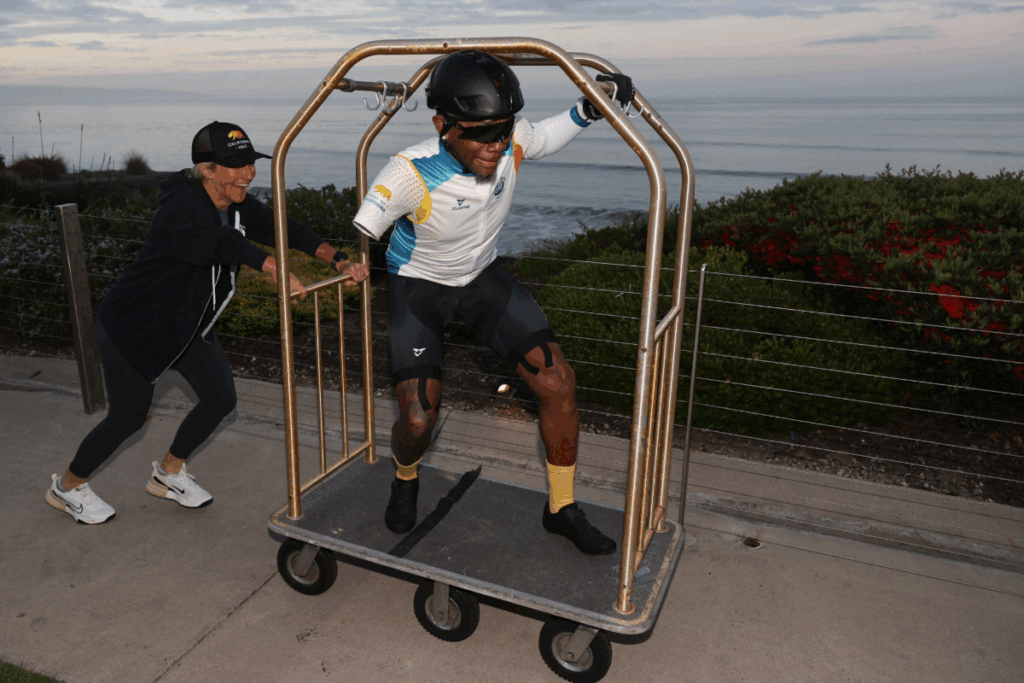
Travel days take energy, and athletes often arrive with more than standard luggage—racing chairs, prosthetics, toolkits, hydration supplies, nutrition bags, rollers, and sometimes multiple cases of equipment. Many properties offer bell services and assistance to help you move anything from the vehicle to the room, reducing fatigue and creating a smoother start to your stay.
Hotel assistance is available when checking out, or perhaps when headed off campus heading to the event, which can be a major advantage on race mornings when focus matters and time is limited. These small acts of support often make the entire trip more comfortable for people with mobility issues, and they help ensure that athletes begin their weekend with energy—not exhaustion.
We often forget that most all meals when traveling are eating out, which can get expensive, but also logistical delays. Navigating a new city after a long day may also prove challenging enough, but for athletes managing mobility needs, narrow sidewalks, uneven curbs, or crowded dining districts can make it all that even harder.
Lodging that offers on-site or adjoined restaurants, cafés, or grab-and-go markets offer convenient alternatives that reduce unnecessary trips and provide easy access to meals without leaving the property. This is especially valuable when weather, traffic, or unfamiliar routes create barriers.

Parents often manage both equipment and race-day logistics. Packing a small toolkit helps solve quick issues. Include an allen key set, pump, zip ties, extra cushion, spare parts and basic cleaning supplies.
Bring wipes or extra clothing in case the shower is not fully accessible. If an athlete experiences temperature regulation challenges, bring a portable heating pad or cooling device.
Save the contact information for a local DME (Durable Medical Equipment) provider in case emergency repairs are needed. For room layout, double-queen rooms or suites often provide enough space for both equipment and family routines.
Certain phrases often signal limited accessibility. Doing a scan of the booking page or room selection for keywords like:
If a hotel cannot confirm basic details, it may not meet functional accessibility needs.
Many hotels follow ADA rules but do not understand how athletes move or prepare for competition. Common challenges include high beds, heavy doors, narrow elevators and shower benches placed far from controls. Staff may assume that ADA compliance meets all needs, which is not always true.
More accessible rooms, better amenities and reliable room data would greatly improve the travel experience for athletes and families.
Call the hotel directly and request photos and measurements of the exact room that will be reserved. This single step prevents most accessibility surprises and helps athletes arrive confident and focused.
Accessible lodging makes every start line possible. Whether you’re traveling with a racing chair, prosthetics, or a full family support team, the right planning helps you focus on what matters most: showing up ready to compete.
Your support helps more athletes access the resources, equipment, and community they need to reach their goals.