Paratriathlon is more than just a race. It’s a life-changing journey that tests endurance, grit, and adaptability. Whether you’re new to sport or an experienced athlete with a physical disability looking for a new challenge, paratriathlon offers a powerful path toward personal growth, achievement, and community.
Since its Paralympic debut at the 2016 Rio Games, paratriathlon has become a cornerstone of adaptive sport. For the Challenged Athletes Foundation (CAF), this discipline holds special significance. CAF was founded through the sport of triathlon, and for more than 30 years, has empowered thousands of athletes to swim, bike, and run toward independence, confidence, and the finish line.
This guide covers everything you need to know to get started in paratriathlon—including equipment, race classifications, training resources, and how to join your first event.
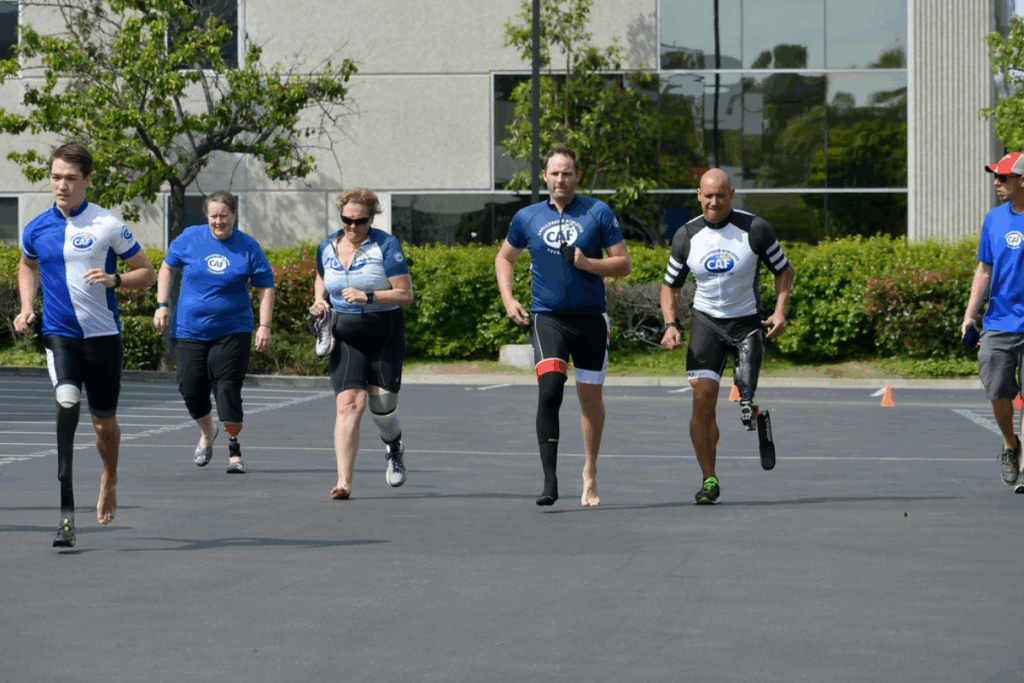
Paratriathlon is the inclusive adaptation of traditional triathlon for athletes with physical disabilities. It features the same three-discipline format—swim, bike, and run—but incorporates adaptive equipment and classification systems to create fair competition.
After its Paralympic debut, the sport opened doors for athletes of all ages and experience levels to challenge themselves, find community, and compete at the highest levels. As Jamie Brown, Team USA paratriathlon athlete, explains:
“Triathlon is one of the few sports that doesn’t compete on a specific field or controlled environment. Every race challenges you differently, and you have to adapt. We never have consistency when it comes to race venues.”
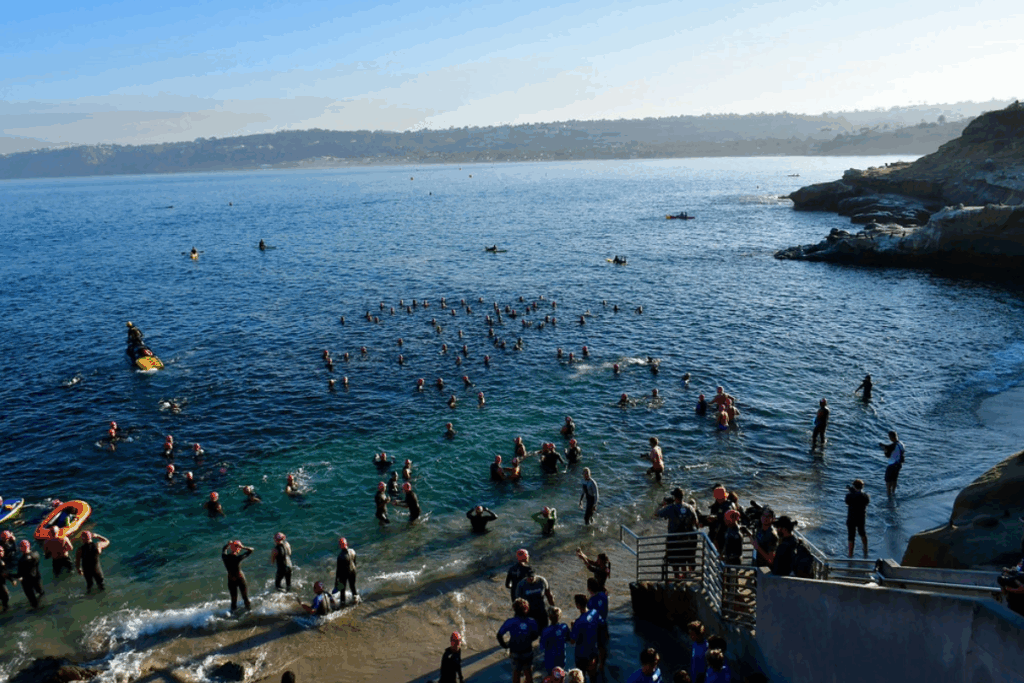
The structure of the race is similar, but there are two key differences:
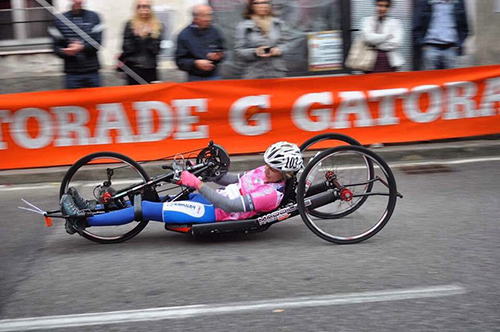
Adaptive Equipment – Athletes may use specialized gear such as handcycles, racing wheelchairs, tandem bikes, or running-specific prosthetics depending on their classification and needs.
Classification System – Race categories ensure athletes compete against others with similar physical capabilities.
| Triathlon Type | Swim | Bike | Run |
|---|---|---|---|
| Sprint | 0.5 mi (750 m) | 12.4 mi (20 km) | 3.1 mi (5 km) |
| Olympic / 5150 | 0.93 mi (1.5 km) | 24.8 mi (40 km) | 6.2 mi (10 km) |
| ITU Long | 1.86 mi (3 km) | 49.6 mi (80 km) | 12.4 mi (20 km) |
| Half / 70.3 | 1.2 mi (1.9 km) | 56 mi (90 km) | 13.1 mi (21 km) |
| Full Ironman | 2.4 mi (3.8 km) | 112 mi (180 km) | 26.2 mi (42 km) |
Classification ensures athletes compete on an equitable playing field. The three major categories are:
PTWC – Wheelchair Athletes
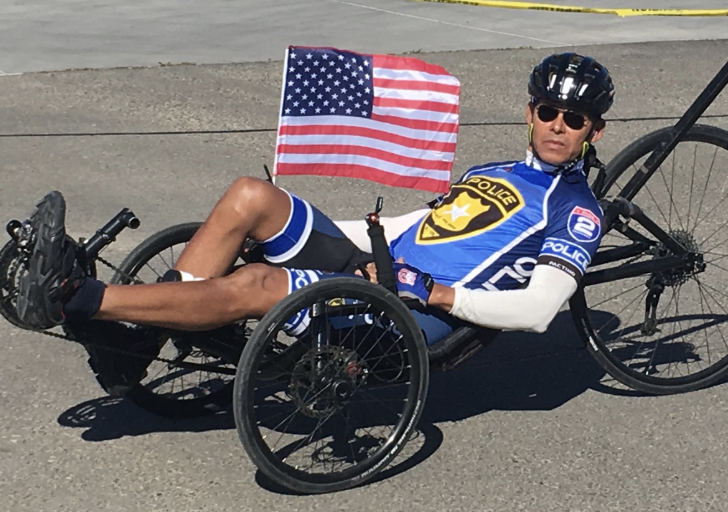
Use a recumbent handcycle for the bike portion
Use a racing wheelchair for the run
Includes athletes with spinal cord injuries, limb loss, or other conditions affecting mobility
PTS2–PTS5 – Ambulatory Athletes
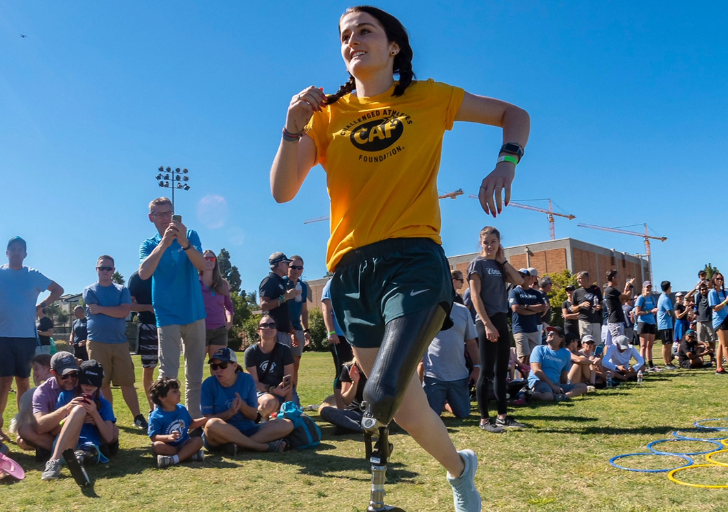
May run with or without prosthetics
Classification is based on impairment severity:
PTS2: severe
PTS3: significant
PTS4: moderate
PTS5: mild
PTVI – Visually Impaired Athletes (B1–B3)
Compete with a sighted guide
Use a tandem bike and may tether during the swim and run
B1 athletes have no light perception; B2–B3 have partial sight
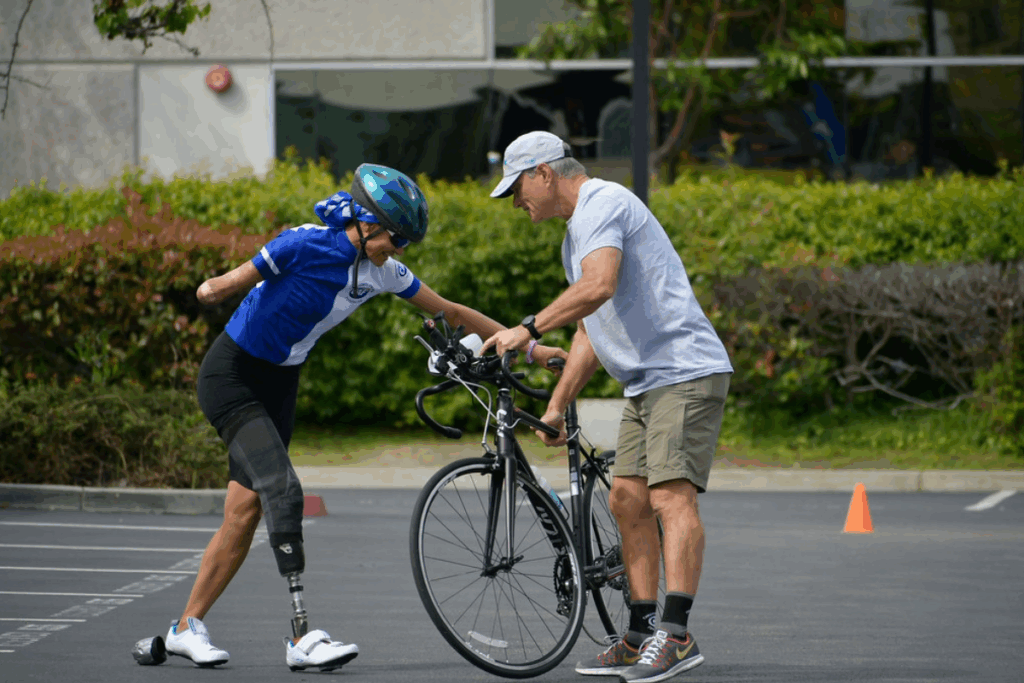
Your gear will depend on your classification and race distance, but a basic checklist includes:
Wetsuit (optional but recommended)
Road or time trial bike
Running shoes
Helmet and gloves
Adaptive Equipment (if applicable):
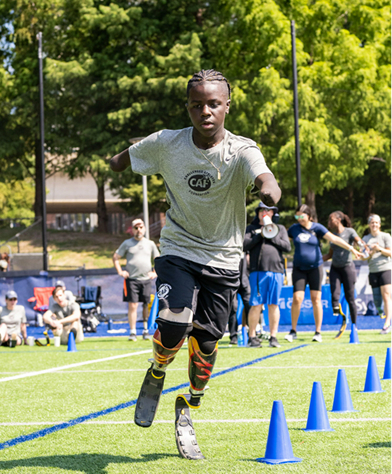
Running-specific prosthetic
Handcycle and racing wheelchair
Tandem bike and sighted guide
CAF has supported thousands of athletes through grants for adaptive equipment, because cost should never be a barrier to participation.
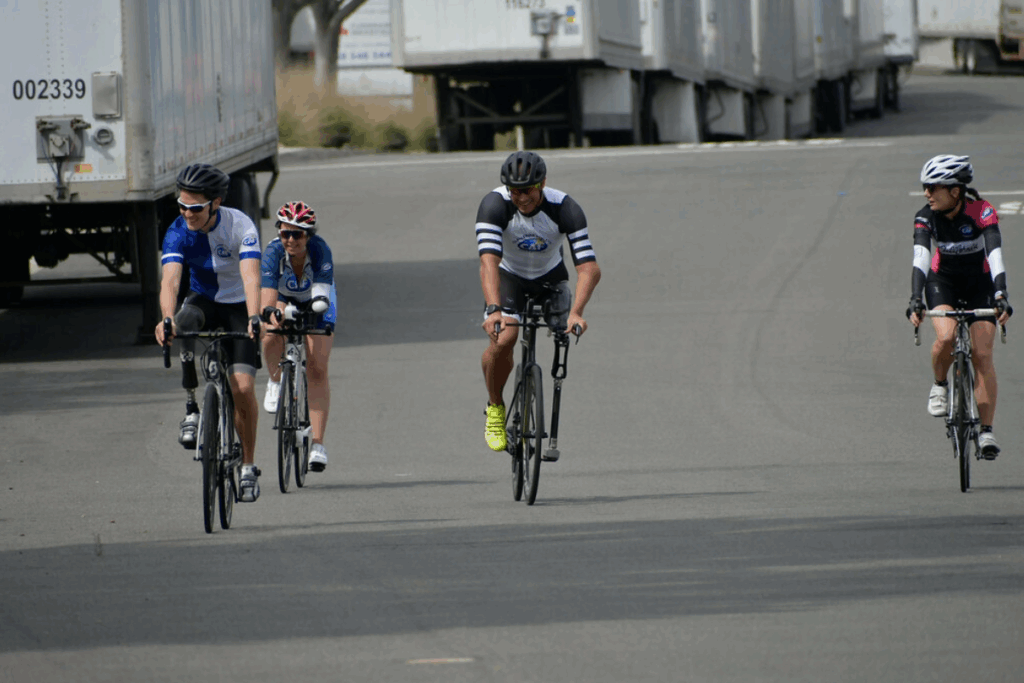
Start by connecting with local triathlon clubs, para sport programs, or community fitness centers. Training with others provides structure, motivation, and mentorship.
Find a race near you:
For wheelchair users, it’s helpful to review course maps and speak with race directors to ensure the terrain and elevation are accessible.
After completing your first races, the next steps are classification and getting involved in the broader paratriathlon community. This includes mentorship, specialized coaching, and competing at higher levels.
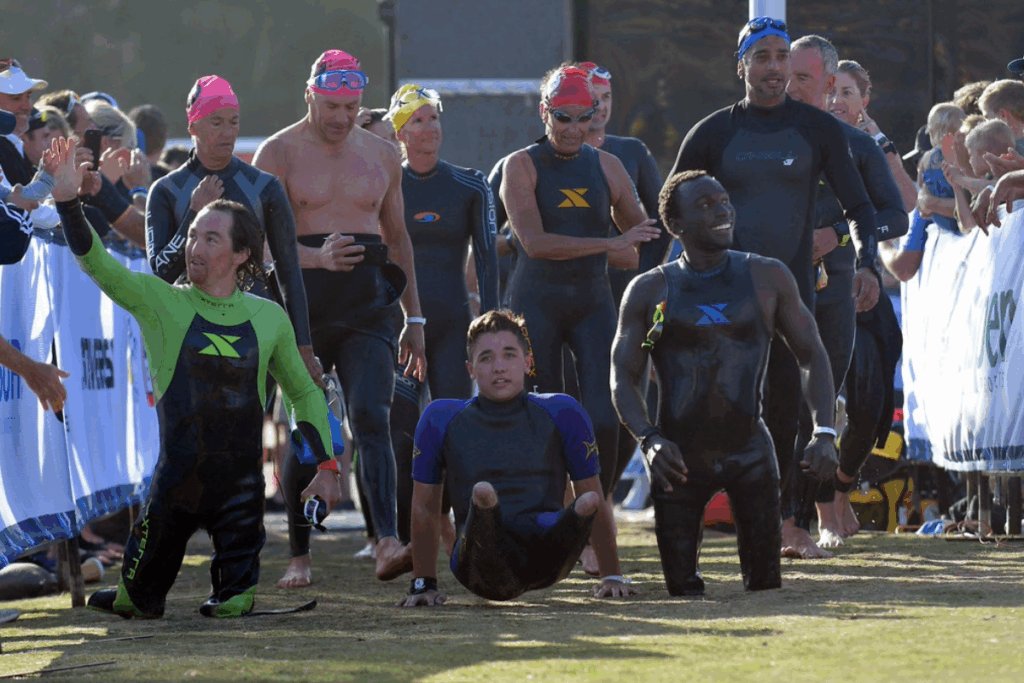
Paratriathlon isn’t just part of CAF’s story — it’s where the movement began. In 1994, three friends came together to support Jim MacLaren, a world-class athlete who became a quadriplegic after a second tragic accident. To help cover the cost of a van for Jim, they organized a fundraiser built around the sport they all loved: the San Diego Triathlon Challenge (SDTC).
That first event set out to raise $25,000. Instead, more than 100 athletes and supporters showed up, and they raised over $49,000. It was the spark that led to the founding of the Challenged Athletes Foundation, built on the belief that sport has the power to change lives.
Over the last three decades, CAF has stayed deeply connected to its triathlon roots. SDTC has grown from a single fundraiser into a flagship weekend that brings together hundreds of athletes, supporters, and families from around the world. Many of the world’s top paratriathletes — including Paralympians and Ironman finishers — got their start through CAF grants, mentorship, or clinics.
CAF’s impact extends across every level of the sport:
Youth Camps introduce kids and teens to the swim-bike-run lifestyle in a supportive environment.
Women’s Wheelchair Paratriathlon Camps provide specialized coaching, community, and visibility for women entering the sport.
Grant funding removes financial barriers, helping athletes access racing wheelchairs, prosthetics, handcycles, tandem bikes, coaching, and travel.
Mentorship networks connect new athletes to experienced competitors, fostering a sense of community and long-term growth.
What started as a single triathlon to support one athlete has become a global movement that has empowered thousands of athletes to pursue sport at every level — from their first race to the Paralympic podium.