This article expands on an original piece by James Sa, a wheelchair rugby player and former CAF staff member. His insights helped shape this look at the sport and its impact.
One of the biggest misunderstandings in adaptive sports is around quadriplegia—what it means, and what it doesn’t. While the word sounds all-encompassing, the reality is a wide spectrum. Some athletes experience minimal loss of hand dexterity, while others live with complete paralysis in all four limbs.
That spectrum of ability created a unique challenge—and an opportunity—for athletes who didn’t quite fit the mold of other wheelchair sports.
So what happens when a group of determined athletes with quadriplegia want to play a high-contact team sport?
They invent one.
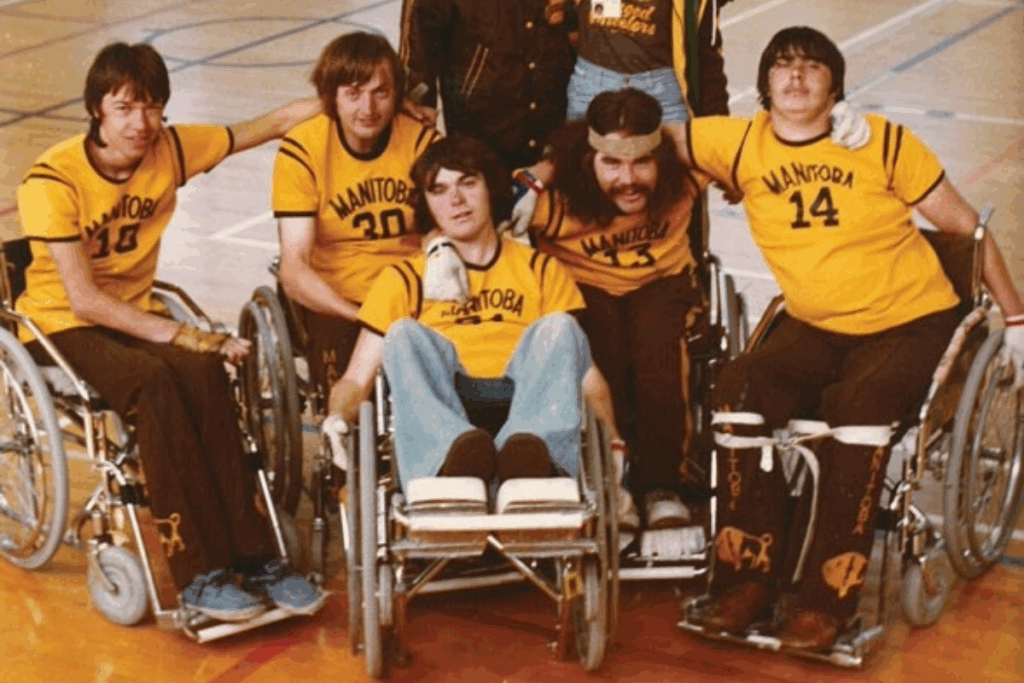
Born on a Canadian basketball court in the 1970s, wheelchair rugby was first known as “murderball”—a bold blend of contact, speed, and strategy. With a volleyball, manual wheelchairs, and no shortage of collisions, the sport quickly gained traction with athletes looking for both competition and camaraderie.
By the 1990s, it had gone international. In 2000, it made its Paralympic Games debut in Sydney, and it has only grown since.
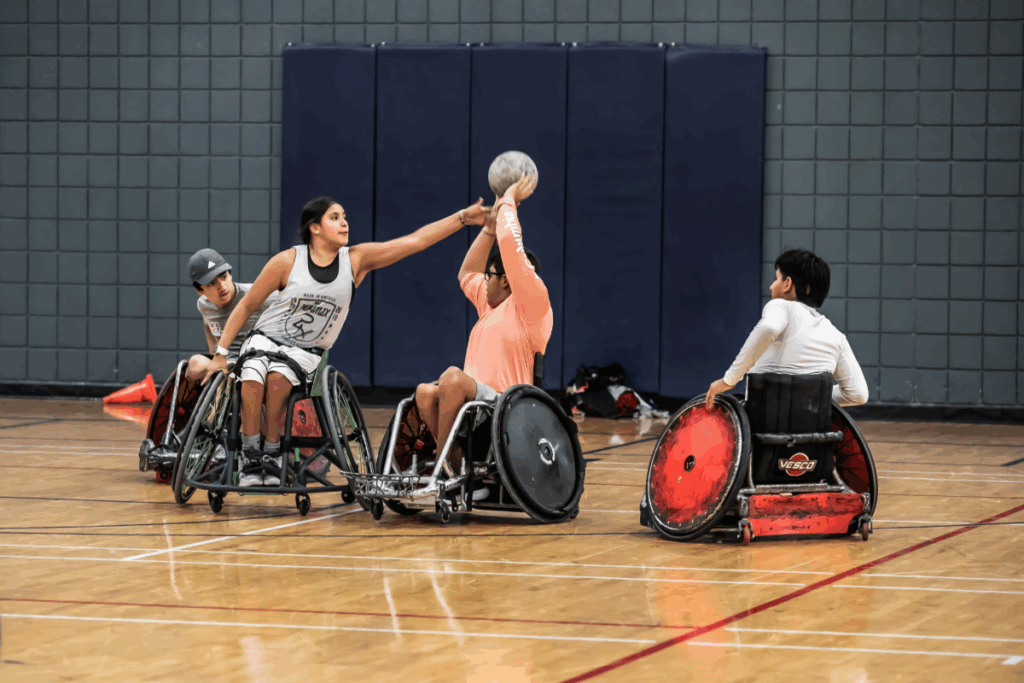
Wheelchair rugby is a 4-on-4, full-contact sport played on a regulation basketball court. The goal? Carry the ball across the opponent’s end line.
The twist? Chair-on-chair contact is encouraged, and players must pass or dribble the ball every 10 seconds.
Because the sport was designed for athletes with upper-limb impairments, a classification system was created:
Players are rated from 0.5 (least physical function) to 3.5 (most physical function).
A team’s four players on the court cannot exceed a combined total of 8 points.
This fosters not just inclusion, but strategic complexity—earning wheelchair rugby its other nickname: “full-contact chess.”
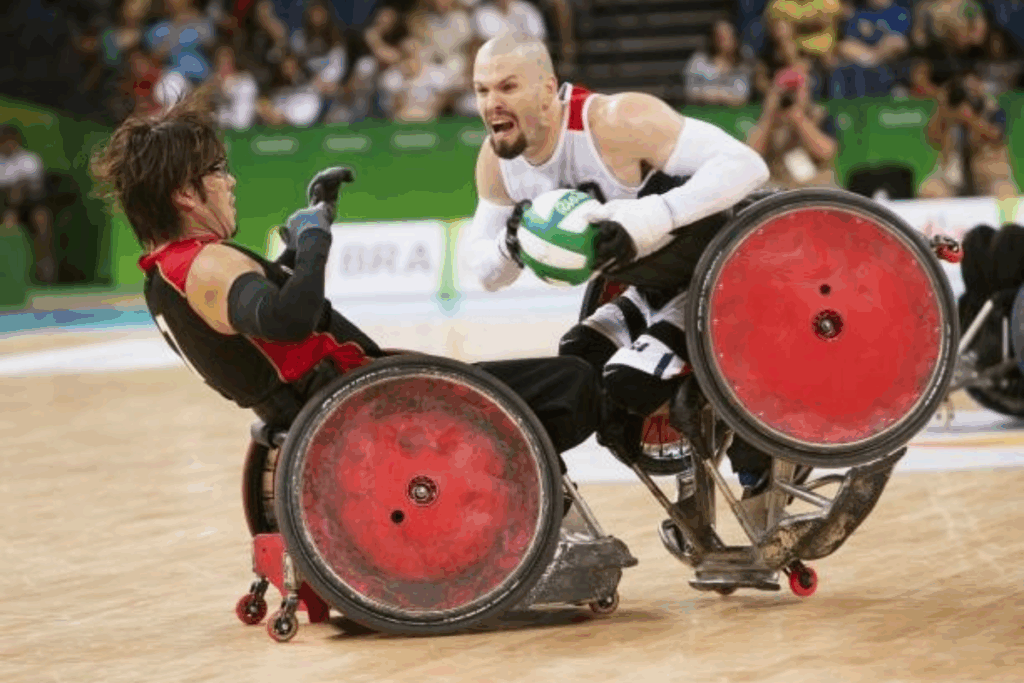
What makes wheelchair rugby unique is how much it continues to adapt and evolve.
CAF-supported Paralympians like Chuck Aoki (3.0) and Kory Puderbaugh (3.0) have helped redefine what’s possible. But behind every high-point scorer is a team of lower-point athletes like Chad Cohn, Lee Fredette, and Joe Jackson—proof that elite talent exists at every classification level.
And it’s not just the athletes who are changing. So is the game itself.
The evolution of rugby chairs has brought more speed, power, and precision. What once looked like a steel trash can on wheels is now a streamlined extension of the athlete, built with cambered wheels, lightweight alloys, and custom seating to maximize mobility.
At the core of the sport are specialized rugby chairs, designed for either offense or defense:
Beyond the chair itself, athletes rely on a range of accessories to improve performance and safety:
Together, these innovations turn a standard wheelchair into a precision tool, tailored to an athlete’s role on the court.
Gone are the days of guesswork. Today’s athletes train with sport scientists, nutritionists, and performance coaches, leading to a level of play that is faster and more physically intense than ever.
A growing, sometimes debated trend is the inclusion of athletes with disabilities outside of spinal cord injuries. These may include:
Athletes with limb loss or limb difference
Athletes with neurological conditions
Athletes with congenital disabilities
These players often bring different strengths—such as greater trunk control or cardiovascular capacity—that can reshape the pace of the game. But they also broaden opportunities for more people to find community through sport.
CAF believes this evolution makes the sport stronger, more inclusive, and more visible.
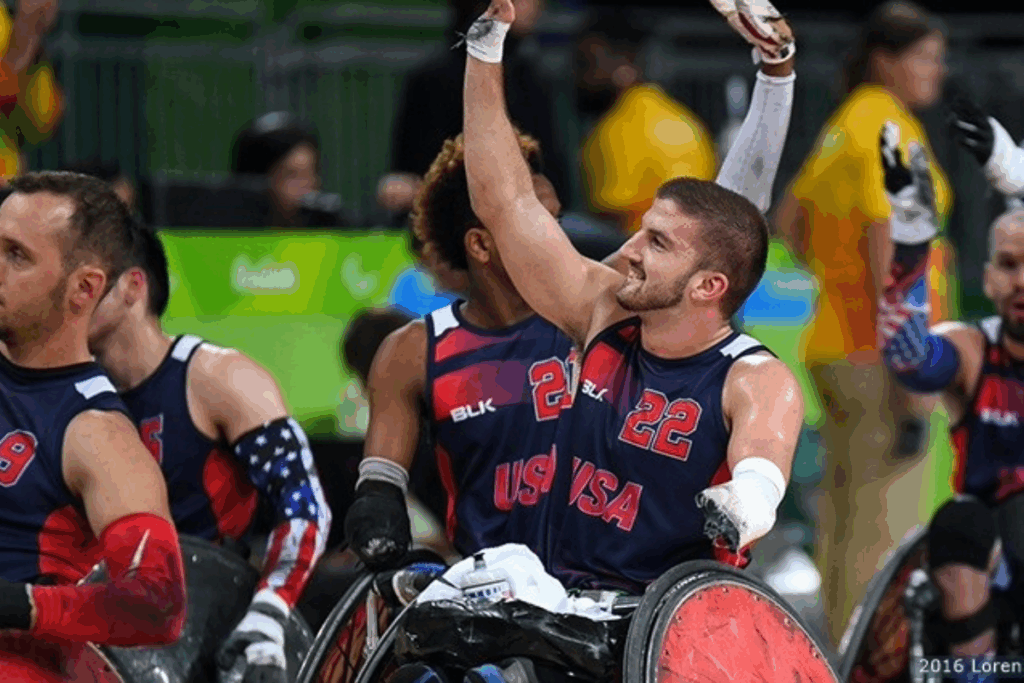
With over 40 years of development, wheelchair rugby has become a cornerstone of the Paralympic Games. Team USA is consistently one of the top-ranked national teams, and many of its stars are CAF-supported athletes who received funding for equipment, travel, and training.
Build the Ecosystem – It takes more than athletes. Coaches, officials, classifiers, therapists, and sponsors are all critical to the sport’s success.
Create Visibility – Events, clinics, and media coverage help show the world that this isn’t a “niche” sport—it’s elite-level competition that deserves the same spotlight as any professional league.
Support the Pipeline – CAF helps young athletes enter the sport through grant funding for rugby chairs and mentorship from national team players.