Every year, athletes from around the world travel to New York City for a chance to take on the Empire State Building Run-Up—a one-of-a-kind stair climb up 1,576 steps to the 86th Floor Observatory of one of the most iconic buildings in the world.
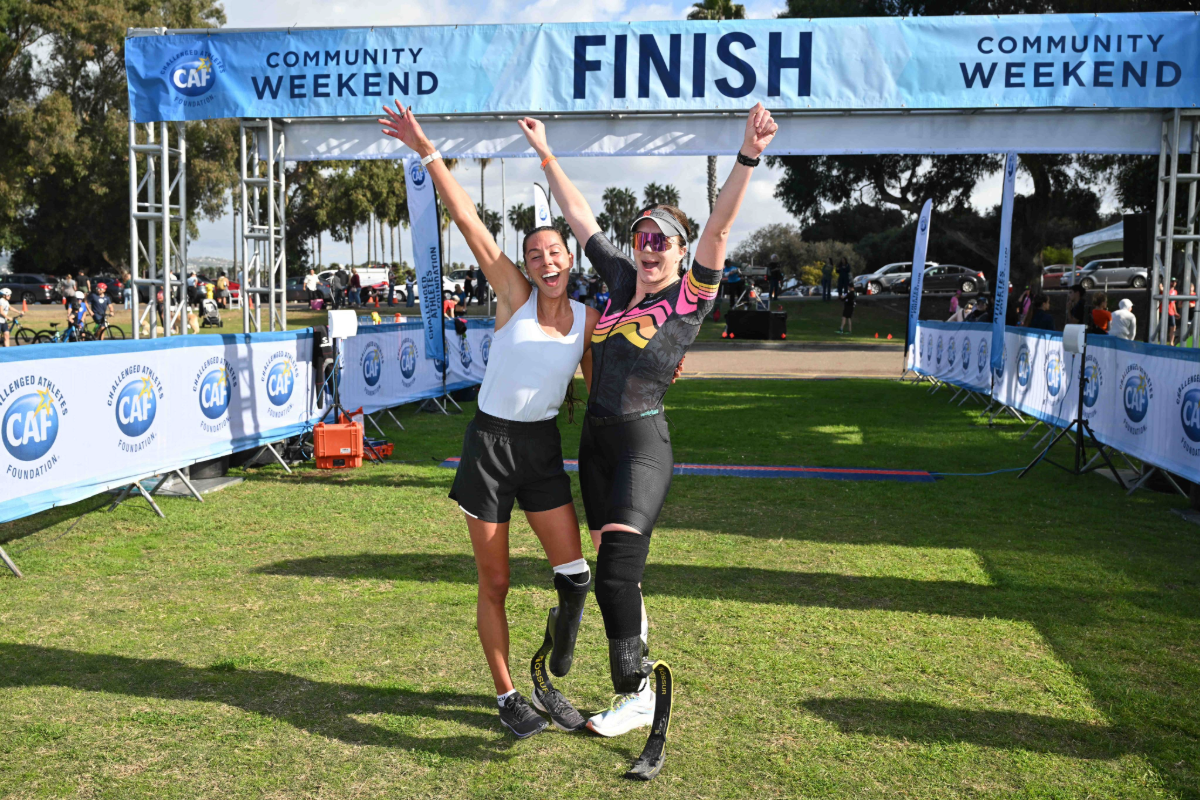
The Challenged Athletes Foundation (CAF) is proud to serve as the official charity partner of this race. The event includes a dedicated division for athletes with permanent physical disabilities as well as CAF supporters who fundraise to empower adaptive athletes through sport.
Among this year’s standout athletes: Paralympic gold medalist Grace Norman. Born with constriction band syndrome and raised in a highly active family, Grace’s passion for sport started early—and it’s never let up. Her career includes multiple Paralympic and World Championship medals, and now, she’s added the Empire State Building Run-Up to her list of challenges.
We spoke with Grace about her experience tackling this race, how she prepared, and her advice for other athletes taking on the climb.

Whether you’re a seasoned athlete or training for your first stair race, a strong cardio base is essential. Grace recommends gradually increasing the duration and intensity of your workouts—just like you would for a long-distance run or triathlon.
“If you feel like you can run, swim, or bike for a long time, that’s helpful,” Grace explained. “If you’re good at filtering lactic acid and keeping your heart rate lower, you’ll fare a lot better. I think people overlook that.”
Climbing stairs is a high-intensity effort—training your body to maintain control under that kind of strain can make all the difference.
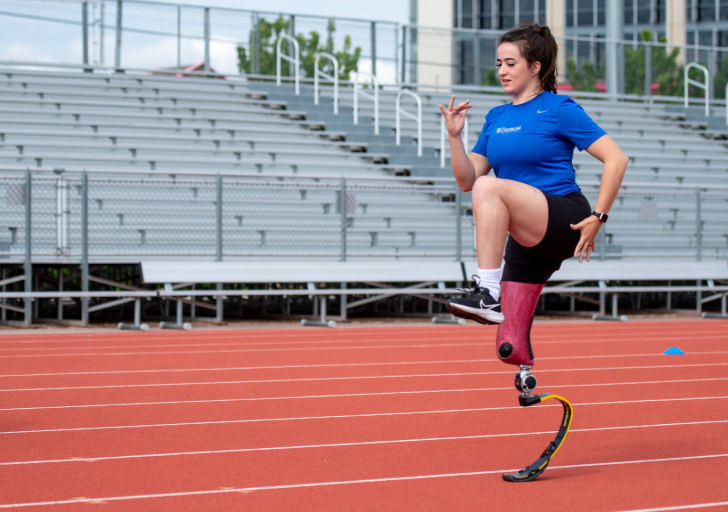
If you’re an adaptive athlete, take the time to find and test the equipment that suits you best. For stair races like this, a standard running blade might not be the right choice.
“Amputees may think to use a blade, but you need to use a leg that’s the same height as your sound leg,” Grace advised. “You’re not compressing it, and you don’t want to spend 86 flights of stairs with uneven hips.”
Finding the right fit—and training with it consistently—can help you stay safe and efficient during the climb.
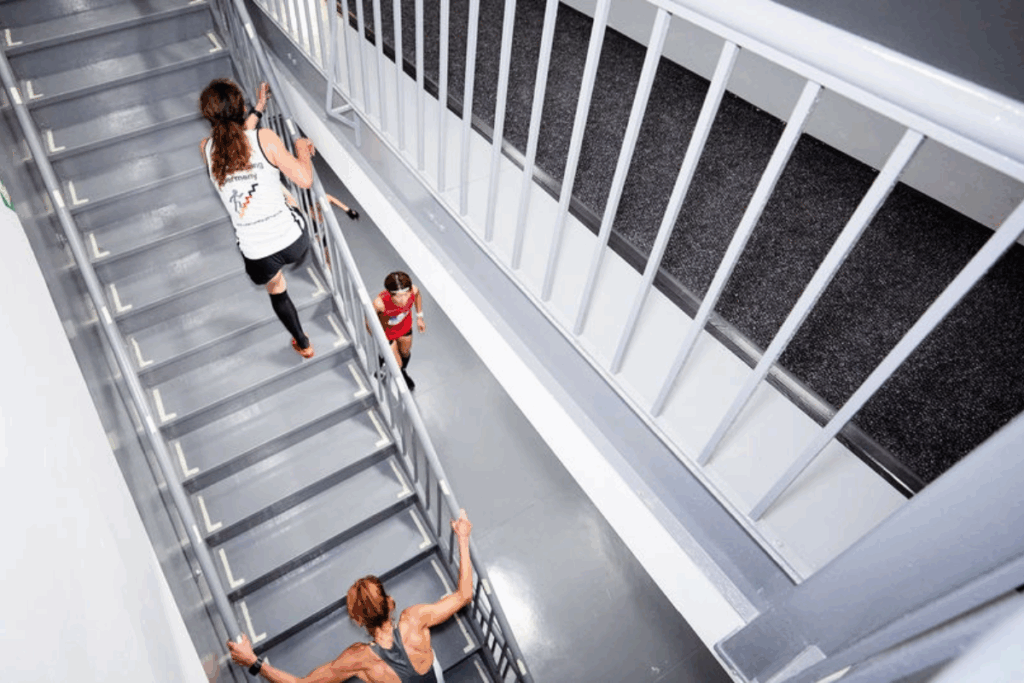
How you move up the stairs matters just as much as your fitness level. Grace found success by combining upper body support with lower body power and using the handrail strategically.
“When my left leg went up, my right arm was on the railing to pull me up. It helped keep my heart rate down,” she said. “When I tried going one step at a time, I couldn’t keep my breath under control.”
Other helpful techniques include:
Physically, the climb is demanding. But mentally, it can be just as tough. Grace recommends preparing your mind as well as your body. A good playlist, a positive mindset, and avoiding distractions can help keep you focused.
“I tried not to look at the floor signs until I was at least halfway,” she said. “It’s a mental trick. If you know how far you have to go, it can mess with you.”
Find what helps you stay in the zone and lean on it when the going gets tough.
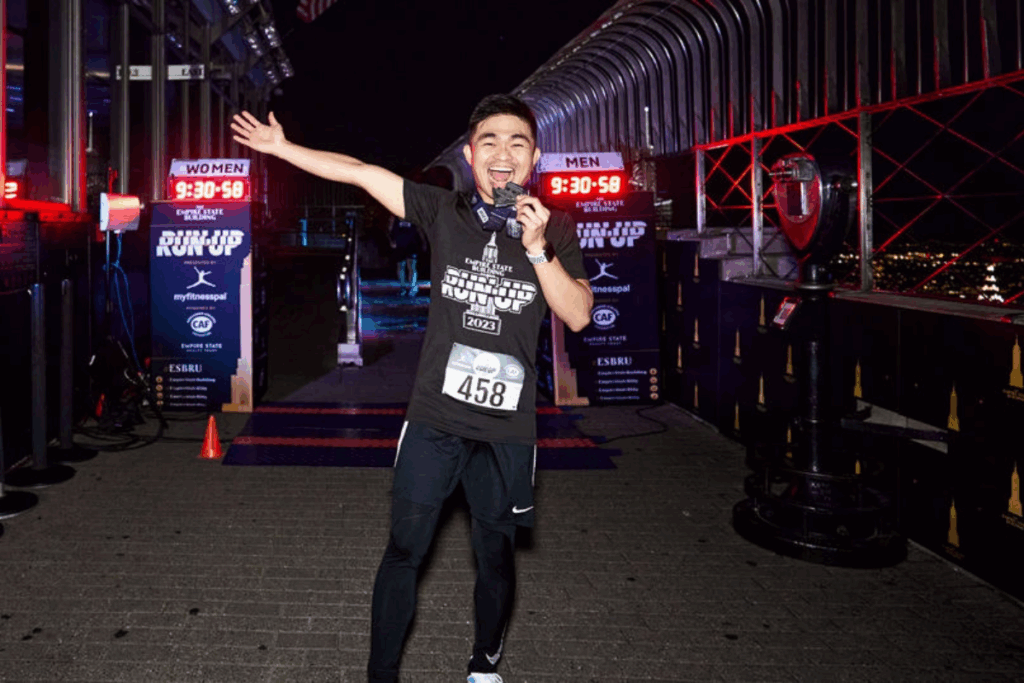
For Grace, reaching the top wasn’t just about completing the climb—it was about appreciating the moment.
“It’s so worth it when you get to see that view,” she said. “It’s a big party at the top. I encourage everyone to do it.”
From the challenge to the celebration, the Empire State Building Run-Up is a one-of-a-kind race that leaves a lasting impact.
Whether you’re an experienced athlete or taking on your first race, the Empire State Building Run-Up is a chance to push your limits, support adaptive athletes, and be part of something special.
CAF is now recruiting athletes and fundraisers for the 2024 event.
Join #TeamCAF for the next Run-Up →
Learn more about how CAF supports athletes with physical disabilities →