For athletes training with lower-limb loss, training with a prosthetic means gradually building strength, balance, flexibility, and endurance while learning to trust the equipment, dial in the right fit, and protect the limb that carries the load. Whether you are starting rehabilitation, returning to running, or working toward triathlons and other endurance sports with a prosthetic leg, progress often comes one step at a time.
Eric McElvenny knows that journey well.
A retired U.S. Marine Corps officer, Eric became a below-knee amputee after stepping on an improvised explosive device while serving in Afghanistan in December 2011. While still recovering in the hospital, he set a goal that would shape the next chapter of his life: complete an IRONMAN triathlon.
What began as a seemingly impossible challenge became part of his rehabilitation and ultimately the start of a life in endurance sports. Less than two years after his injury, Eric reached the finish line at the IRONMAN World Championship in Kona. He has since completed nine IRONMAN-distance races and become a two-time Paralympian.
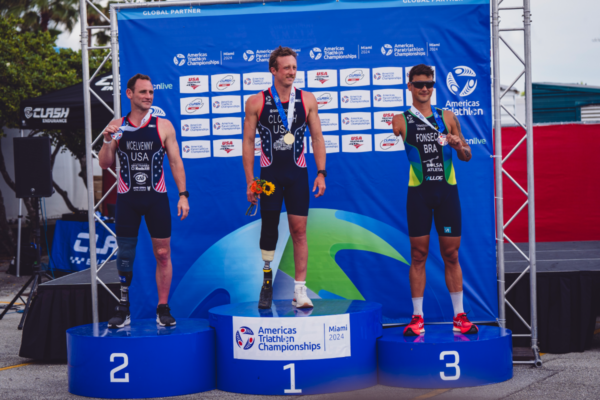
Through years of running, racing, and learning what his body needs, he has discovered that success with a prosthetic is not simply about pushing harder. It is about patience, consistency, proper fit, recovery, and taking care of the body that makes every mile possible. The lessons ahead look at prosthetic fitting, adapting to a running blade, foundational exercises for balance and strength, recovery, and the value of community and professional support so athletes can regain mobility and pursue big goals safely and sustainably.
Eric did not begin as an experienced distance runner.
In the early stages of his recovery, he started running with his everyday walking prosthesis because that was what he had available. He remembers becoming frustrated when running did not immediately feel natural.
“I remember thinking that I am not good at this. But I just kept showing up.”
That patience became an important part of his progression.
His first run was a single lap around a track, approximately 400 meters. Over the following weeks, one lap became two. Eventually, he reached a mile. Then a 5K.
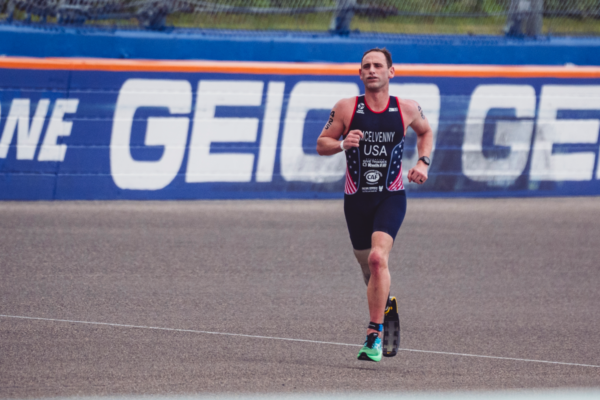
The progress could feel slow in the moment, but looking back made it possible for him to recognize just how far he had come.
For athletes beginning their own running journey, that progression is important. Psychological adaptation varies greatly after limb loss, and not everyone adjusts at the same pace; feelings of grief and loss can occur early in recovery. Rather than focusing immediately on speed or mileage, Eric recommends giving the body time to adapt and building a foundation that can support greater training demands.
“You’re not going to start running and all of a sudden be running five miles. It’s a process.”
About four months after his amputation, Eric received his first below-knee running prosthesis.
The difference was immediate.
Compared with his everyday walking prosthesis, the running prosthesis was lighter and designed to return energy as he moved. But new equipment also meant gait training and consciously relearning the biomechanics of moving with a new device.
During one of his first sessions, he remembers being given a surprisingly simple instruction: run the way he remembered running.
After one lap around the track, something clicked.
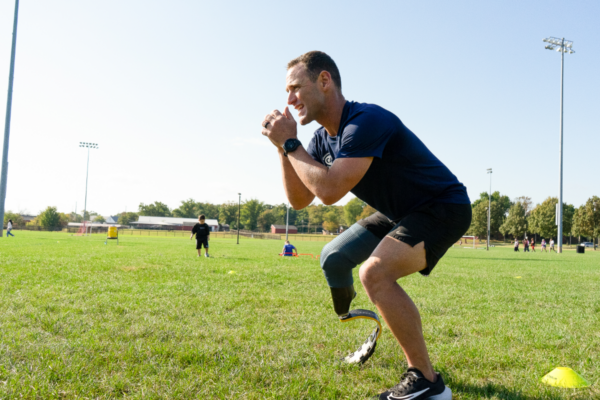
For lower limb amputees, that process usually progresses in stages and focuses on the stance and swing phases, with the gait cycle spending about 60% in stance and 40% in swing.
“It was such night and day.”
The equipment helped, but learning to use it effectively required something else: trust.
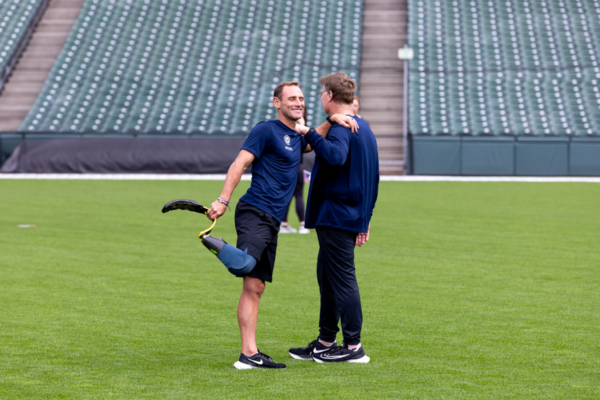
For Eric, one of the biggest challenges in the beginning was learning to fully load the prosthetic side of his body.
Like many new runners adjusting to a prosthesis, he found himself spending more time on his sound-side leg and moving quickly off the prosthetic side. But doing so made it more difficult to use the energy return of his running prosthesis effectively.
He began practicing balance exercises, early weight shifting drills, marching drills and other controlled movements that helped him become more comfortable putting weight through his prosthetic side. Practicing standing drills with light hand support helped improve control, proprioception, and confidence before progressing to more dynamic balance work.
“Having a trust in your prosthesis is one of the most important pieces of learning to run.”
That confidence did not come from simply pushing through uncertainty. It came through practice, repetition, and support from his rehabilitation team. Balance and proprioception training also helps regain sensory-motor connections post-amputation, while dynamic balance challenges improve core and lower-body adjustments.
Working closely with a prosthetist and physical therapist was especially important, as his care team helped patients build control on the prosthetic side and strengthen the sound limb as needed while Eric learned how his body moved and what he needed from his equipment.
A well-fitting socket can make a significant difference when running with a lower-limb prosthesis.
Eric learned that lesson the hard way.
Early in his journey, his instinct was to push through discomfort. That sometimes resulted in skin breakdown, blisters and according to Eric, multiple staph infections during his first few years after amputation.
Eventually, he realized that responding to discomfort early was not a sign of weakness. It was part of staying healthy enough to continue training.
Today, Eric McElvenny pays close attention to changes in his residual limb during a run. He carries prosthetic socks to account for volume changes, gel pads that can help him manage pressure within the socket, and an Allen wrench for equipment adjustments. When adapting to a first prosthesis or a fit change, a wearing schedule with short sessions and skin checks after use can help build tolerance safely. Education on skin care may also include gentle massage, daily stretching to help prevent contractures in nearby joints, residual limb desensitization to manage nerve sensitivity and help shrink the limb for socket fit, and regular inspection of the prosthetic socket to catch problems early.
Nearly 15 years after his amputation, that preparation remains part of his routine.
Athletes should not assume that sharp pain, persistent pressure, skin breakdown, blisters or signs of infection are simply part of running with a prosthesis. These issues can warrant stopping the activity and working with a prosthetist, physical therapist or medical professional to determine the cause.
If redness persists after removing the prosthesis, stop using it and contact your prosthetist or therapist.
For Eric McElvenny, learning to address a problem early has become one of the most important tools for staying active long term.
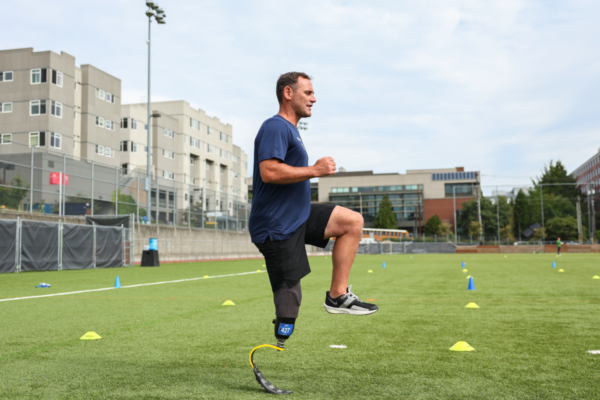
Running may be the goal, but Eric McElvenny believes some of the most important work happens outside the miles themselves.
His three fundamentals are simple:
During approximately eight months of physical therapy, Eric consistently worked on his core, strength, mobility, and flexibility before significantly increasing his running mileage, using strengthening exercises to improve gait quality and endurance while targeting the deep abdominal and back muscles for trunk stability.
Unilateral work can help address side-to-side asymmetries and changes in muscle function after amputation, and therapists often build those exercises around the residual muscles and practical skills needed day to day.
Later, as his IRONMAN training volume grew, those foundational exercises became easier to skip.
Eventually, he paid for it.
While preparing for another IRONMAN, he remembers focusing almost exclusively on swimming, cycling and running. Stretching, flexibility and core work fell away, and he ultimately developed a lower-back injury.
The experience changed how he approached training.
For Eric, four productive hours on the bike followed by an hour devoted to mobility and recovery can be far more valuable than squeezing in a fifth hour of riding if that additional load increases the risk of injury.
The lesson applies well beyond IRONMAN racing. The basic work can be easy to overlook, but it helps make the bigger goals possible. A physical therapist can individualize the work and set measurable goals as training progresses.
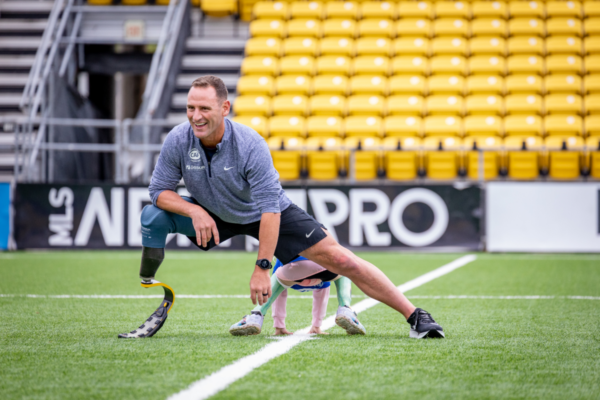
Training does not exist separately from recovery.
Eric has trained seven days a week during particularly demanding periods, but not every session carried the same intensity. A hard running workout might be followed by an easier swim or dedicated recovery session. At other times, a full day off might be the right choice.
Working with a coach has helped him balance those demands throughout his career. Many athletes also benefit from a structured home program between therapy sessions, and that kind of home exercise can accelerate progress. It should match your clinician’s rehabilitation process, with 5 to 7 sessions per week when appropriate based on recovery, soreness, and fatigue. Technology-assisted training can complement conventional rehabilitation, not replace it.
Recovery also means giving the body what it needs between workouts, including adequate nutrition and hydration. As his training volume increased, he found himself naturally paying more attention to the foods that helped him feel prepared for the next session.
The larger principle is simple: when you ask more from your body, taking care of it becomes an essential part of the training plan.
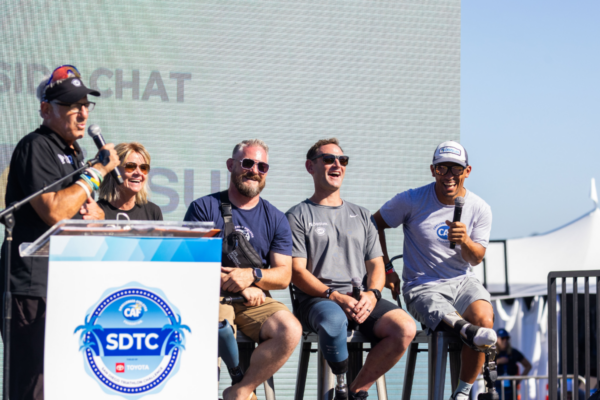
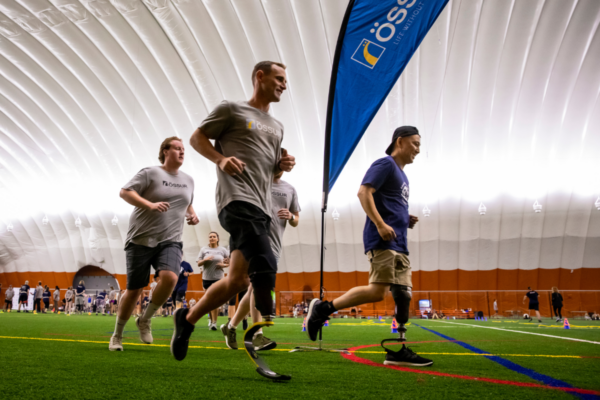
When Eric first began his recovery as a new amputee, one of his greatest resources was seeing what other athletes with limb loss were already doing, and that kind of peer support can make emotional adaptation easier.
Through physical therapy, other service members and the Challenged Athletes Foundation community, he was surrounded by people who showed him what might be possible.
“I saw what I could potentially look like a year from now, just by watching and being with some of the other athletes.”
That community mattered, and amputee rehabilitation also depends on psychological preparation and realistic expectations about what a prosthesis can and cannot do.
His advice to an athlete considering a first run or triathlon today is straightforward:
“Try not to do it alone.”
Ask questions. Connect with athletes who have experience. Work with qualified prosthetists, physical therapists and coaches who understand your goals and individual needs. Learn from people who have already navigated some of the same obstacles.
For an athlete with limb loss, the swim, bike and run may only be part of the equation. Socket fit, prosthetic setup, skin integrity, balance and movement mechanics can all factor into training and racing.
Having knowledgeable people around you can make the process safer, more sustainable and less overwhelming. Functional training should also include task-specific practice for everyday life and daily living, including environmental obstacle navigation, so progress carries over beyond workouts.
Eric’s journey did not begin with nine IRONMAN finishes or the IRONMAN World Championship. It began with one extraordinarily ambitious goal and a willingness to keep working toward it.
There was a time when getting around the track once was the accomplishment.
Then came 800 meters.
Then a mile.
Then a 5K.
Eventually, there was Kona.
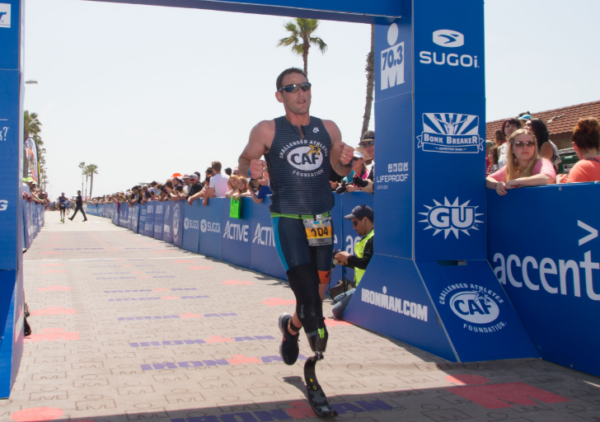
His story is a reminder that learning to train with a prosthetic is not about mastering everything on day one. Rehabilitation has several phases after limb loss, with post-operative therapy often beginning in the hospital or a sub-acute setting, the pre-prosthetic phase starting 2 to 3 weeks after surgery as wound healing is closely supervised and active exercises may begin shortly, and prosthetic fitting typically coming after that preparatory phase. It is about building trust in your body and equipment, developing a strong foundation, responding when your body tells you something needs attention and continuing to show up.
For athletes wondering where to begin, Eric McElvenny’s experience offers a fitting starting point:
Be patient. Focus on balance, strength, and flexibility. Take care of your body. Find people who can support you. Then keep showing up.
Because sometimes progress begins with a single lap.