On July 27, 2026, John Goss stepped into the darkness of Death Valley and began one of the most demanding endurance events in the world.
Ahead of him stretched 135 miles of pavement, extreme heat, steep mountain climbs, and nearly two days of continuous forward movement. By the time he reached the finish line 38 hours and 11 minutes later, he had completed Badwater 135, a race often referred to as the “World’s Toughest Foot Race.”
But for John, Badwater was never really about the miles.
It was about a promise.
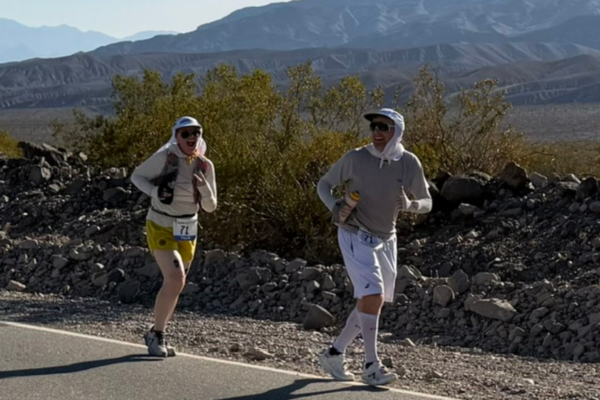
Long before ultramarathons, buckle ceremonies, and finish lines, John was simply looking for ways to spend time with his father.
After his father was diagnosed with Alzheimer’s disease, many of the activities they once shared became increasingly difficult. One thing remained constant: running. While John ran, his father rode alongside him on a bicycle, creating moments together that would ultimately shape the rest of John’s life.
Those miles became more than exercise. They became an opportunity to stay connected as Alzheimer’s progressed, creating memories that John still carries with him today.
“My dad was my hero,” John shared during his conversation with CAF. Running gave them a way to spend time together and experience life side by side, even as the disease changed their relationship. What started as a simple activity eventually became something much deeper, creating space for connection, conversation, and togetherness during one of the most difficult chapters of their family’s life.
Soon before the passing of his father in 2011, John made a commitment to both his father and mother that still resonates with him to this day. John wanted to honor his father’s life and his mother’s devotion to others by pursuing some of the toughest races he could find and see just how far he could go.
That promise became the foundation for a journey that would span more than a decade.
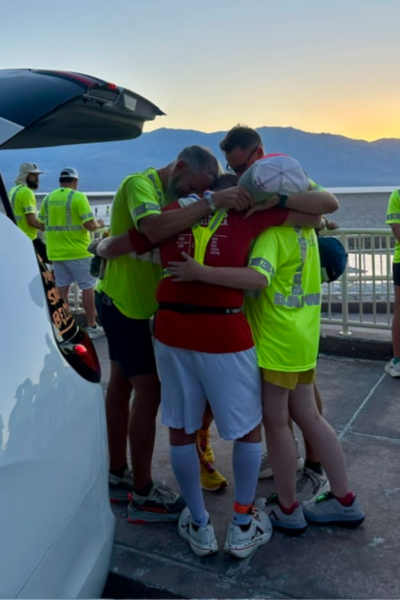
As John navigated the loss of his father, another path was also taking shape.
Inspired by his experience supporting his dad and fueled by a desire to help others, he returned to school and earned his special education credential. Around 2012, he began a career teaching special education, carrying forward the values of service, patience, and perseverance that had become so important in his own life.
His mother, a teacher herself, was also a big part of his decision. She reflected such selfless devotion and service through her many years of caring for John’s father. His parents helped instill a belief that challenges are not something to run from, but opportunities to show up for others and make a difference.
The connection between endurance and service became clear.
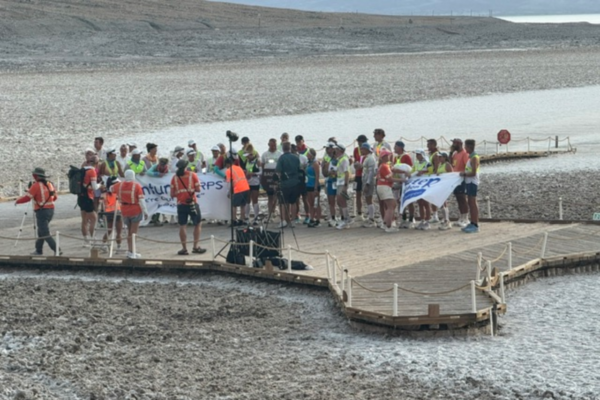
Whether in the classroom or on the trail, John discovered that meaningful progress often happens one step at a time. The same qualities that help an ultrarunner keep moving forward through discomfort, consistency, patience, resilience, and trust in the process, are often the very same qualities required in teaching.
Years later, those same values would lead him to the Challenged Athletes Foundation. Through AdventureCORPS chief adventure officer Chris Kostman, John learned about CAF and its mission to create opportunities through sport. The organization’s focus on possibility, perseverance, and community immediately resonated with him.
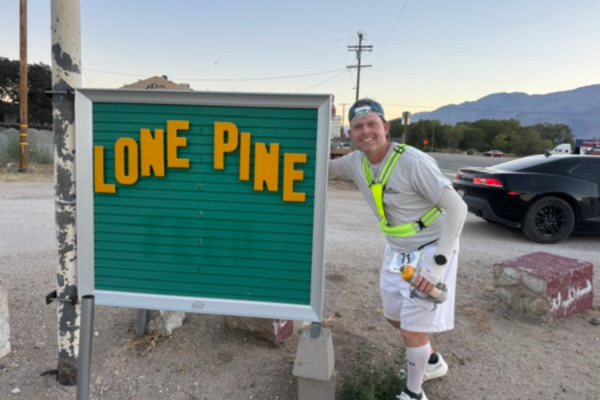
For many ultrarunners, Badwater occupies a legendary place in the sport.
The race begins at Badwater Basin, approximately 282 feet below sea level, and travels 135 miles across Death Valley toward the Mount Whitney area, giving each runner a specific 45-hour cutoff to complete the entire race. Along the way, runners face multiple mountain passes, relentless heat, and numerous strict cutoff times that leave little room for error.
The course itself is as remarkable as the challenge.
John spoke passionately about the dramatic landscapes, the climbs through Townes Pass and out of Panamint Springs, the approach toward Lone Pine, and the final stretch up to Mount Whitney Portal. Having crewed the race three separate times before ever running it himself, he had already developed a deep appreciation for the terrain and everything it demands from runners and crews alike.
“Even before I ever ran the race, that place had changed my life,” John shared about Death Valley and the surrounding region.
For him, Badwater wasn’t just a race. It had become connected to family memories, faith, reflection, and years of preparation.
The dream began taking shape around 2012. Over the next decade, John accumulated the experience needed to qualify, completing 100-mile races, participating in AdventureCORPS events, and learning everything he could about the ultra-running world.
When he learned he had been accepted into the 2026 field, years of preparation suddenly became real.
The months leading up to race day were filled with training, logistics, nutrition planning, crew coordination, lodging arrangements, and balancing family life with the demands of pursuing a lifelong goal.
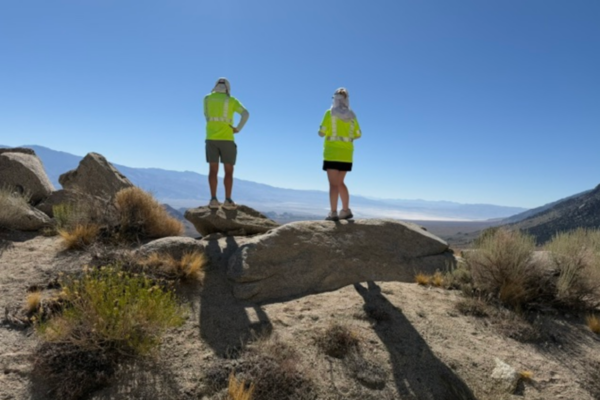
Throughout the race, John returned to a simple set of principles that helped carry him through some of the toughest moments.
Stay present.
Run humble.
Take one step at a time.
Those reminders became especially important as fatigue, heat, and uncertainty began to build.
Rather than focusing on how far remained, he concentrated on the next section of road. Rather than worrying about the finish line, he focused on reaching the next checkpoint. Rather than getting overwhelmed by the magnitude of the challenge, he trusted his preparation, his crew, his faith, and the support surrounding him.
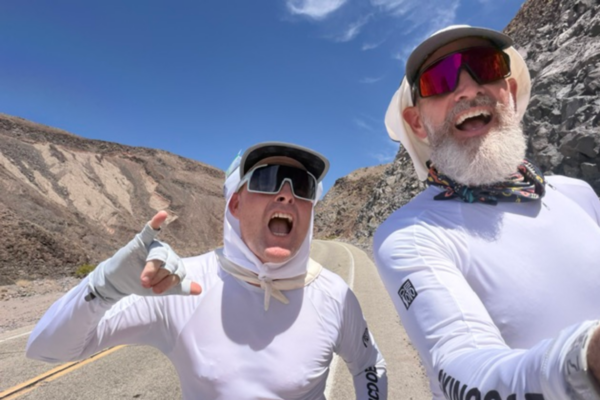
The race tested every aspect of his endurance, but it also reinforced something he had learned long before stepping onto the start line: difficult things become manageable when you focus on the next step instead of the entire journey.
When he crossed the finish line, he had accomplished his goal of finishing under 40 hours, completing the race in 38 hours, 11 minutes, 12 seconds. Yet his thoughts were not centered on the time. They were centered on gratitude.
John repeatedly credited his faith, crew, family, and friends for helping him reach the finish line. The buckle he earned serves as a symbol of the accomplishment, but the relationships that carried him there mean far more. He also said, “My crew was absolutely second to none.”
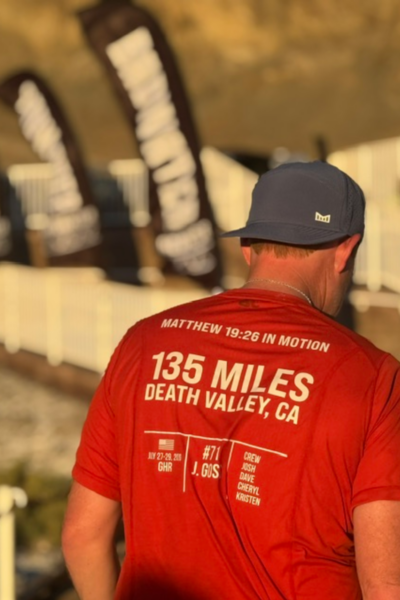
Despite completing one of the most difficult endurance races in the world, John is quick to turn the spotlight away from himself.
Instead, he points to the people who motivate him every day.
Among them is a former student whose resilience, humor, courage, and perspective continue to leave a profound impact on his life. The student communicates through an eye-tracking speech device and approaches challenges with a positivity that John finds deeply motivating.
The two have discussed participating in a race together someday, with John pushing him in an adaptive setup. The idea of helping someone experience the joy of crossing a finish line is something that John speaks about with genuine excitement.
It is a vision that perfectly reflects the values that have guided him throughout his life.
Not personal achievement.
Shared achievement.
Not individual recognition.
Shared experience.
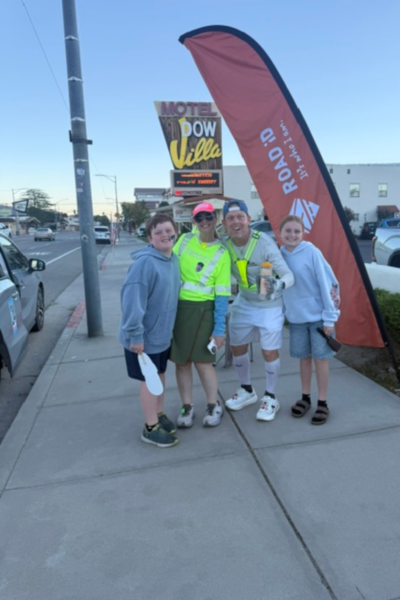
Another lesson John has learned through ultrarunning is that no one accomplishes these goals alone.
One of the things he loves most about the sport is the way athletes support one another regardless of pace or placement. Whether it’s an elite runner offering encouragement to someone farther back in the field or a crew helping their athlete through difficult conditions, the ultra-running community is built on mutual respect and a shared understanding of what it takes to keep moving forward.
That spirit reminds him of many of the same values that make communities stronger: compassion, encouragement, humility, and the willingness to help someone else succeed.
It’s also what makes organizations like CAF so meaningful.
Every athlete’s journey may be unique, but the belief that anything is possible when people come together is universal.
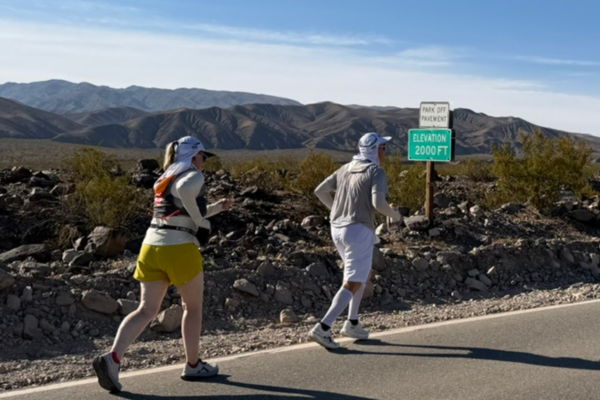
Today, both John’s son and daughter occasionally join him on training adventures, riding their bikes or scooters alongside him for miles at a time and even participating in endurance events themselves, along with their mom.
It’s a full-circle moment that isn’t lost on him. It really is a family affair.
Years ago, it was John’s father riding beside him as he discovered a love for running. Today, a new generation is creating memories of their own.
Those moments serve as a reminder that the impact of sport often extends far beyond competition. The lessons learned through perseverance, dedication, family, and shared experiences have a way of carrying forward long after the miles are finished.
The Real Finish Line
Because while Badwater 135 may be known as the world’s toughest foot race, the true challenge was never about surviving Death Valley’s heat or reaching the finish line in under 40 hours.
For John, the journey began with a son spending time with his father.
It continued through loss, faith, family, teaching, service, and a commitment to helping others discover their own potential.
And somewhere along 135 miles of road stretching across Death Valley, the promise he made years ago came full circle.
Today, John continues carrying the faith and foundation his parents showed him. And whether running, coaching, or teaching, he hopes to reflect to others how important it is to stay present, run humble, trust the process, and keep moving forward one step at a time.
That’s a message that reaches far beyond any finish line.