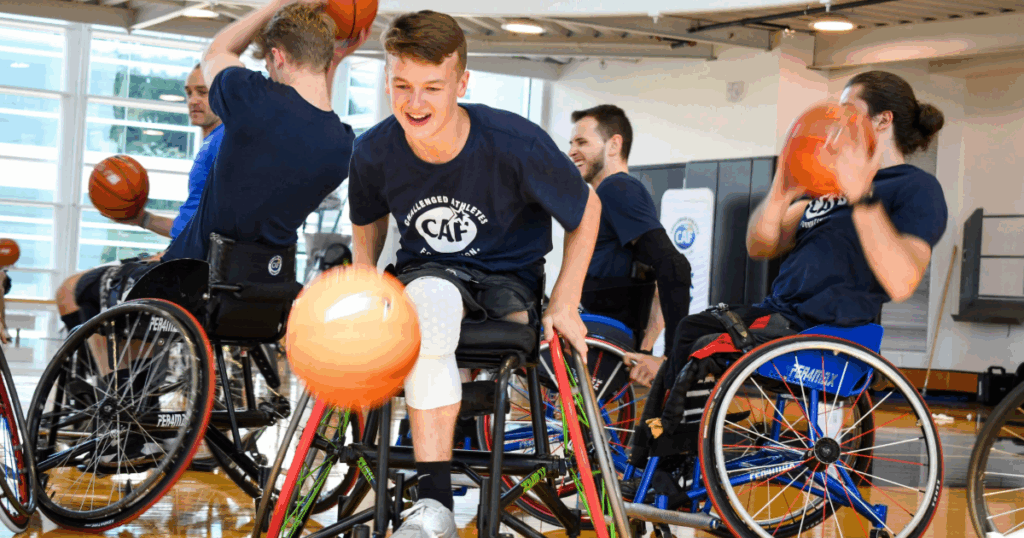
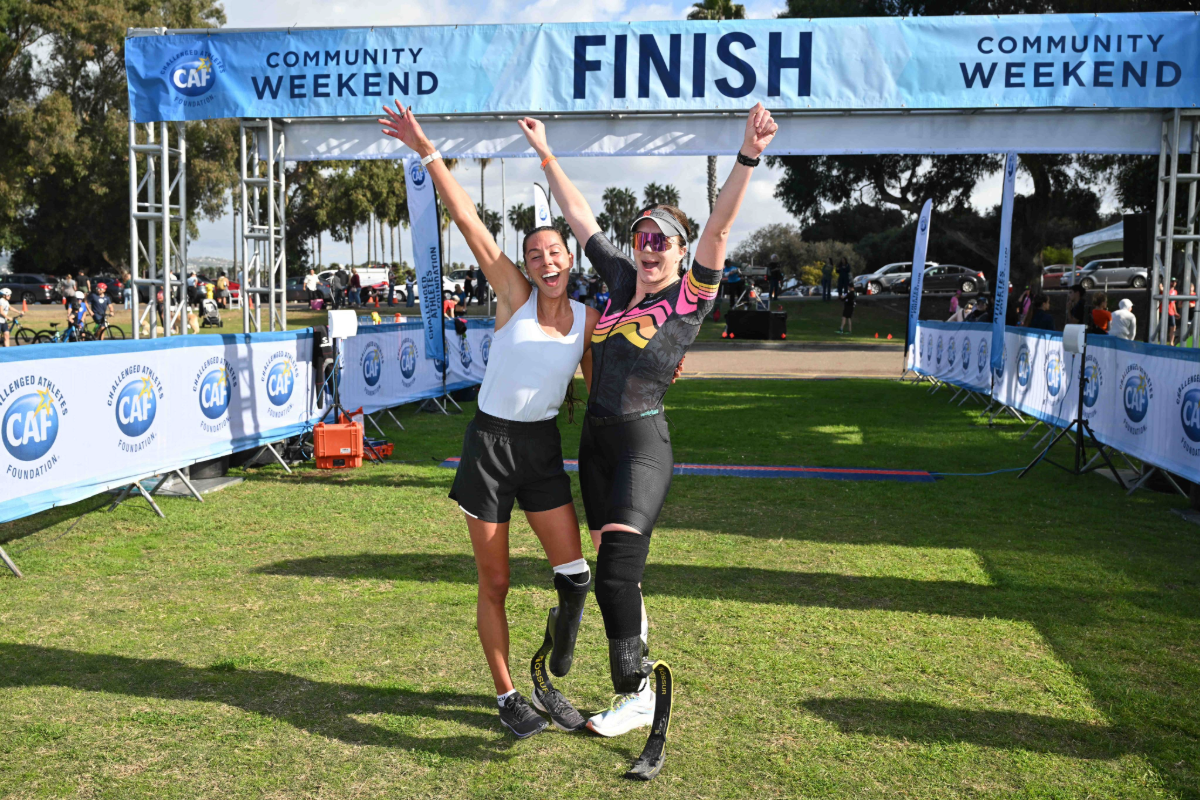
What happens when basketball—the world’s most popular team sport—meets adaptive design? You get wheelchair basketball, a game just as fast, technical, and team-driven as any version played on the court. From local gyms to Paralympic arenas, this sport gives athletes with physical disabilities the chance to compete, connect, and redefine what it means to play the game.
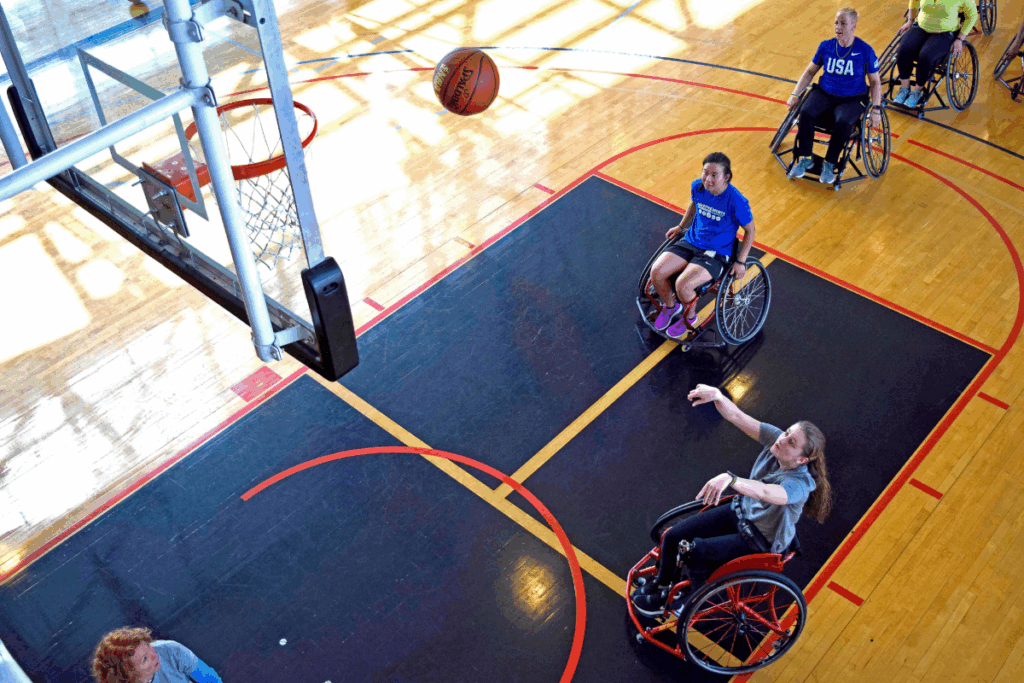
Wheelchair basketball emerged after World War II, when injured veterans in the U.S. sought ways to stay active and competitive. By the late 1940s, organized leagues had formed, laying the groundwork for one of the world’s premier adaptive sports.
Today, the sport is played in nearly 100 countries. It made its Paralympic debut in 1960 and remains one of the most popular events on the program—showcasing speed, strategy, and elite-level talent.
The rules are very similar to traditional basketball, with a few key adaptations:
Court and scoring: Games are played on a regulation basketball court with standard hoops. Two points are awarded for a basket inside the arc, three points outside, and one point for free throws.
Dribbling rule: Athletes must dribble after every two pushes of the chair to maintain possession.
Classification system: Players are rated from 1.0 (most significant physical limitation) to 4.5 (least significant). Teams of five on the court cannot exceed 14 total points, ensuring inclusion of athletes across ability levels.
The result is a sport that demands endurance, coordination, and teamwork—often described as “basketball at full speed, on wheels.”
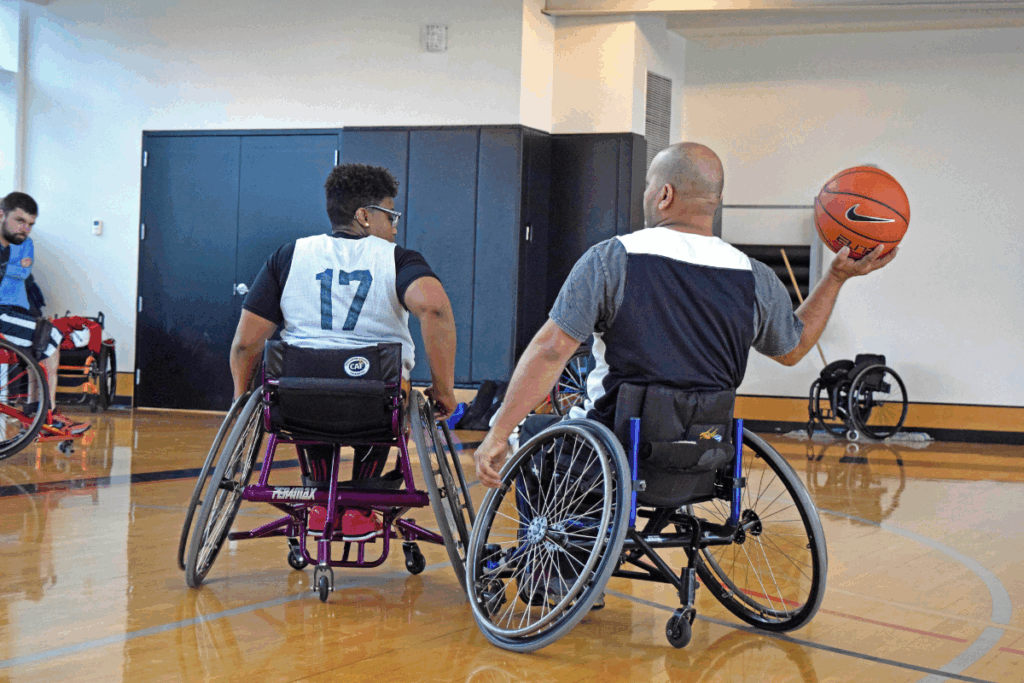
Wheelchair basketball wouldn’t exist without the evolution of specialized equipment. What began with standard hospital wheelchairs has become high-performance technology built for speed, agility, and durability.
Multi-Sport Wheelchairs: Designed for flexibility across sports, with adjustable seat height, center of gravity, and footrests. Rear anti-tip casters improve safety for newer athletes or multi-use settings. (Source: Eagle Sports)
Basketball-Specific Chairs: Lightweight, highly cambered (angled) wheels allow sharp turns and stability. Front bumpers prevent wheel lock during contact, while rear caster wheels provide balance. Chairs are fully customizable for body fit and playing style. (Source: PER4MAX)
Hand Rim Covers: Improve grip for better propulsion, quick stops, and tighter turns.
Straps: Secure waist, thighs, calves, or feet to improve stability and prevent injury during intense play. Chest straps add support for athletes with less trunk control.
Cushions: Reduce skin pressure, promote comfort, and improve posture. Ventilated designs keep athletes cool during long games. (Source: How I Roll Sports)
These innovations transform a chair into a performance tool—tailored to each athlete’s needs, position, and playing style.
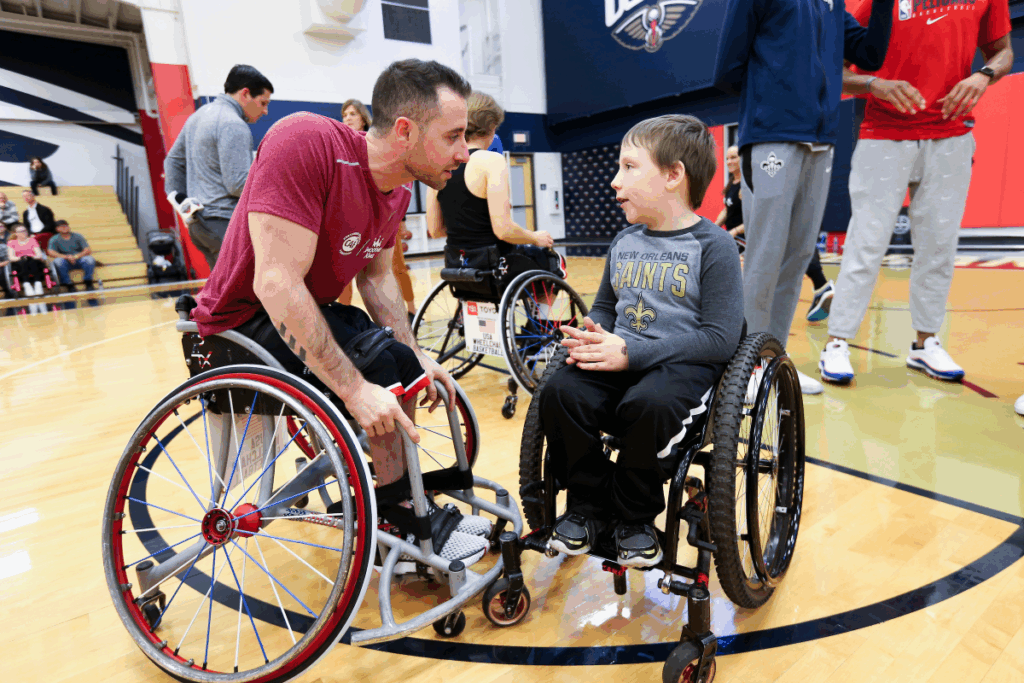
Training in wheelchair basketball mirrors the intensity of traditional basketball, but with unique adaptive drills. CAF’s Training Zone highlights key skills:
Chair Control: Athletes practice starting, stopping, and turning at speed, often using cone drills to simulate defensive pressure.
Ball Handling: Passing and dribbling are integrated with chair pushes to develop rhythm and timing.
Shooting Mechanics: Players adjust upper-body strength and balance to shoot accurately from seated positions.
Strength & Conditioning: Core, upper-body, and cardiovascular training are essential for endurance across four 10-minute quarters.
CAF clinics and community partners provide structured training opportunities, ensuring athletes at every level have pathways and resources to improve.
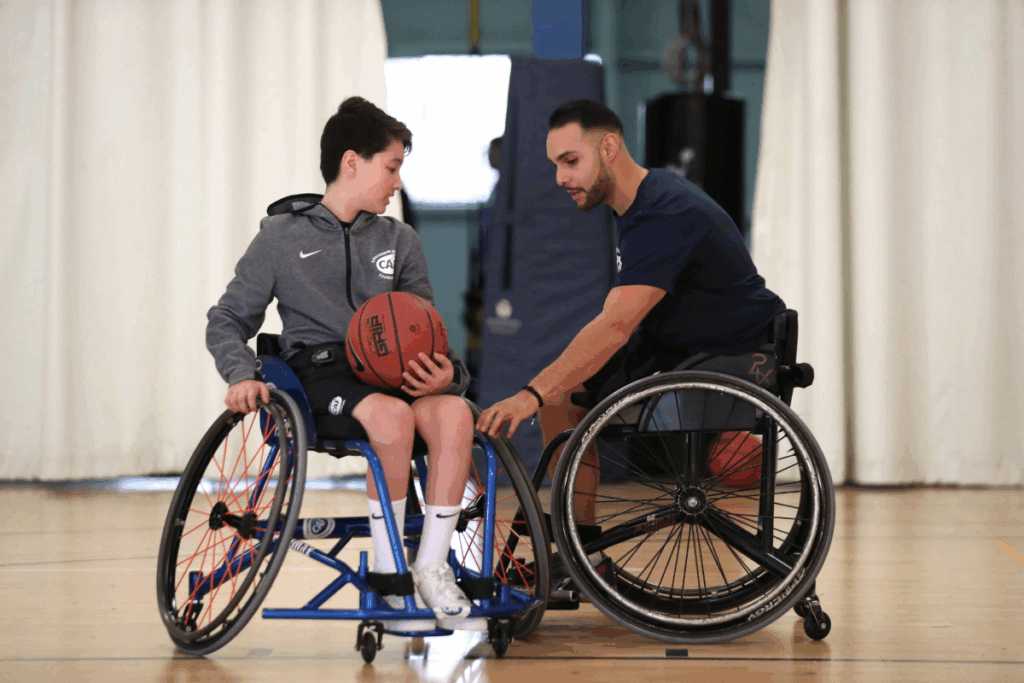
Wheelchair basketball thrives because it’s more than just a game—it’s a global community. Local leagues and recreational programs introduce the sport to beginners, while national governing bodies organize competitive play.
CAF supports this ecosystem by funding grants for equipment, hosting introductory clinics, and connecting athletes with mentors like Paralympians Steve Serio and Matt Scott. These athletes demonstrate that the sport is not just inclusive, but elite.
In the U.S., the National Wheelchair Basketball Association (NWBA) plays a central role in organizing leagues at every level—from youth to adult to elite competition. Through the NWBA’s club search, athletes can find local teams, build skills, and join a supportive community of players and coaches.
Wheelchair basketball is one of the most watched sports at the Paralympic Games. Team USA—men’s and women’s—consistently ranks among the best in the world, with multiple gold medals to their name. Many athletes representing Team USA have received CAF support for their equipment, travel, and training.
Athletes: Apply for a CAF grant to fund a basketball chair or attend a CAF clinic to try the sport.
Coaches & Volunteers: Support programs by learning adaptive coaching strategies through CAF Training Zone resources below.
Supporters: Donate to help athletes access the equipment and training they need to thrive.
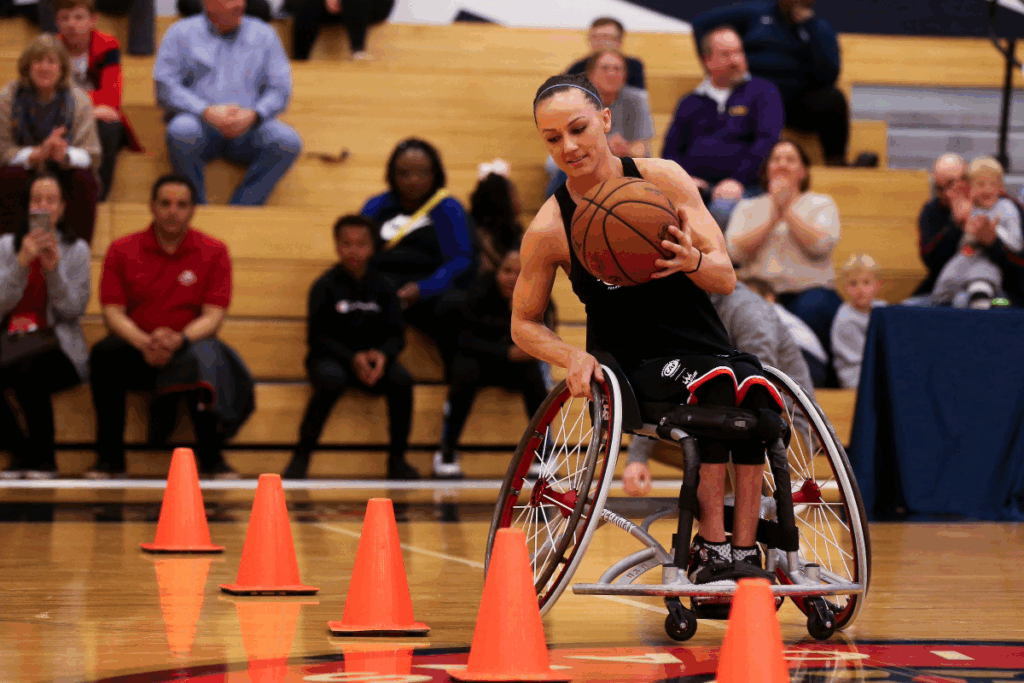
Want to build your game? Explore these CAF Training Zone videos designed by coaches and Paralympians. Each drill can be practiced individually or combined into a workout.
Chair Skills & Quarter Turns – Improve agility with quick turns, pivots, and defensive movement.
Form Shooting – Learn balance, elbow alignment, and follow-through.
Form Shooting – Alternative – Adjust your form with modifications to match your strength and balance.
Simon Says Drill – Sharpen hand-eye coordination and reaction speed.
Dribbling in Motion – Build rhythm and control while pushing your chair.
Dribbling Behind the Back – Master advanced handling for game situations.
Passing – Inside – Develop short, accurate passes.
Passing – Outside – Practice long-distance passing with accuracy.
Ball Handling – Strengthen fundamentals like fingertip control and two-hand dribbling.
Ball Pick Ups – Train core strength by picking the ball off the ground.
Ball Pick Ups in Motion – Combine speed and coordination to scoop the ball while rolling.
Sit-Ups – Build core strength for stability on the court.
Push-Ups – Adapt upper-body strength training.
Push-Ups (Alternative) – Modified options for different ability levels.
Triceps Dips – Increase pushing power and endurance.
Triceps Dips (Alternative) – Adapted version for stability or range of motion needs.
Wheelchair basketball is proof that sport transcends barriers. From pickup games in community gyms to gold-medal performances on the world stage, it empowers athletes to push limits, connect with teammates, and inspire the next generation.
Let’s keep the momentum going—one basket, one grant, and one story at a time.
This equipment overview was adapted from resources created in partnership with Eagle Sports, PER4MAX, and How I Roll Sports. It is intended for educational purposes only and does not reflect an endorsement of specific products or companies by CAF.