CAF recently spoke with grant recipient Hannah Webster about her journey from marathon runner to one of the world’s top adaptive CrossFit athletes. The story below is based on that conversation and Hannah’s reflections on rebuilding her life after being diagnosed with Multiple Sclerosis.
For most of her life, Hannah Webster found joy, purpose, and confidence through movement.
Living in Pembrokeshire on the west coast of Wales with her husband, Neil, two energetic dogs, and an elderly cat with plenty of attitude, Hannah built an active lifestyle around running. She completed 13 marathons, including the London Marathon nine times, while balancing a career in global public relations that took her around the world.
Exercise wasn’t simply part of her routine. It shaped how she handled challenges, built friendships, explored new places, and pushed herself toward new goals.
Then, in 2020, everything changed.
Although she had experienced symptoms for years, hearing the words, “You have Multiple Sclerosis,” at age 40 brought an entirely new reality.
“It was devastating,” Hannah recalls. “Looking back, the symptoms had been building for years, but hearing the words ‘You have Multiple Sclerosis’ at forty felt like someone had pulled the rug out from underneath me.”
As the disease progressed, walking became more difficult. Her balance deteriorated, she developed significant foot drop, and she slowly came to terms with the possibility that she might never run again.
While the physical changes were significant, Hannah says the emotional impact was even greater.
“The hardest part wasn’t the physical symptoms,” she says. “It was losing the person I thought I was.”
In 2022, Hannah underwent a hematopoietic stem cell transplant (HSCT) in London in an effort to halt the progression of her MS. Every April 26, she celebrates what she calls her “re-birthday,” the day her immune system was effectively reset.
The transplant couldn’t undo the damage already caused by the disease, but it gave her something she desperately needed: hope for the future.
“The transplant didn’t reverse the damage already done, but hopefully it has stopped any new disease activity and given me the opportunity to focus on rebuilding my life.”
That rebuilding didn’t begin with returning to the sport she had lost. Instead, it began by discovering a new way to compete.
Fortunately, Hannah had already been introduced to CrossFit before her diagnosis. At the time, she viewed it as something that complemented her running. After MS changed what her body could do, it became something much more.
“After my stem cell transplant, I found myself looking for a new goal,” she says. “Running wasn’t possible anymore, but I wasn’t ready to stop competing. CrossFit gave me that opportunity.”
What drew Hannah to adaptive CrossFit wasn’t simply the workouts. It was the philosophy behind them.
Rather than focusing on what athletes couldn’t do, coaches and fellow competitors focused on adapting movements and finding new ways to succeed.
“For someone who was grieving the things she’d lost, that mindset was life changing.”
She also found a community that welcomed her exactly as she was.
With her trademark sense of humor, Hannah describes CrossFit as “less a gym and more a slightly obsessive community that somehow convinces you that burpees are a reasonable life choice.”
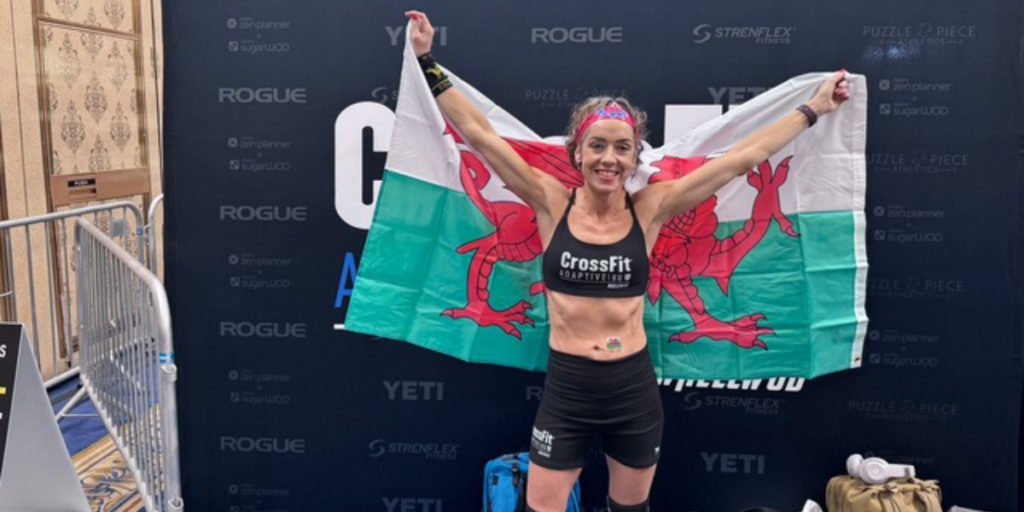
Looking back, Hannah sees sport as the thread connecting every stage of her life.
As a child, it gave her confidence. As an adult, it introduced her to lifelong friendships, opportunities to travel, and the resilience that would later become essential.
After her diagnosis, sport became something even more meaningful.
“The way I move has changed dramatically,” she says, “but my desire to challenge myself hasn’t.”
Living with Multiple Sclerosis means accepting that every day looks different.
“MS is unpredictable,” Hannah explains. “One day you can feel strong and capable and the next day your body refuses to cooperate.”
That unpredictability has forced her to redefine success.
Some days, success means standing on the competition floor. Other days, it simply means showing up and doing what she can.
Through it all, she says she’s learned that determination can be one of her greatest strengths.
“I’ve also learned that stubbornness can occasionally be a useful personality trait.”
Only a few years ago, Hannah wondered whether she would be able to walk independently in the future.
Today, she is ranked among the world’s top adaptive CrossFit athletes.
Her competitive résumé continues to grow, including a fourth-place finish at the 2025 Adaptive CrossFit Games in Las Vegas and a second-place finish at Wodapalooza Miami earlier this year. She is currently preparing to compete again at the Adaptive CrossFit Games in San Jose.
Looking back, the journey still feels difficult to believe.
“A few years ago I was wondering whether I’d be able to walk independently in the future,” she says. “Now I’m travelling internationally and competing against some of the best adaptive athletes in the world.”
Although the results are significant, they aren’t what Hannah considers her greatest achievement.
“Qualifying for international competition after losing so much physical function is something I’m incredibly proud of,” she says. “But if I’m honest, I’m probably most proud of refusing to disappear.”
She continues, “MS took away a lot of things that mattered to me, but it didn’t take away my ambition, my sense of humour or my willingness to keep trying.”
For Hannah, simply continuing to pursue ambitious goals has become its own victory.
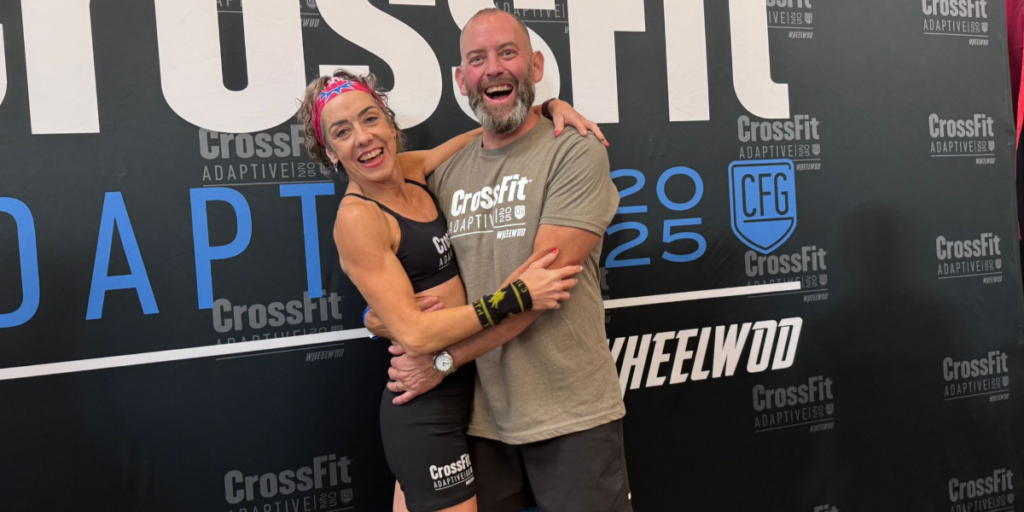
Competing internationally requires far more than dedication and training. Travel, accommodations, competition entry fees, and specialized equipment quickly become significant financial barriers for many athletes with physical disabilities.
Through a CAF Grant for sports expenses, Hannah has received support to continue pursuing opportunities to compete at the international level.
“The financial reality of competing internationally as an athlete with a physical disability is challenging,” she says. “Travel, accommodation, competition costs and specialist equipment all add up quickly.”
She says CAF’s support has helped make those opportunities possible while also providing something less tangible but equally important.
“More importantly, it sends a message that athletes with physical disabilities belong on these stages and deserve the opportunity to compete.”
For Hannah, that’s what access to sport is really about.
“Sport gives me independence, purpose and confidence,” she says. “It allows me to focus on what my body can do instead of what it can’t. Everyone deserves access to that feeling.”
Today, Hannah’s goals extend beyond the competition floor.
Alongside training for the Adaptive CrossFit Games, she is completing a Master’s degree in Creative Writing and working on a memoir about life before and after Multiple Sclerosis.
Whether she’s writing or competing, the purpose remains the same.
“My goal is to show that life doesn’t end after diagnosis,” she says. “It changes, but it can still be meaningful, challenging and joyful.”
She also hopes others who are navigating disability will discover that their own journey isn’t over.
“The goal isn’t perfection,” Hannah says. “The goal is participation.”
Looking back, Hannah believes disability stories are often placed into categories that don’t reflect real life.
“I think people often assume stories about disability are either tragic or inspirational,” she says. “The truth is usually somewhere in the middle.”
“My life is messy, funny, frustrating and occasionally brilliant. I still have bad days. I still get angry about the things I’ve lost. But sport has given me a way forward.”
For Hannah, adaptive CrossFit didn’t simply replace running. It gave her a new way to challenge herself, reconnect with her identity, and discover a future she never imagined possible.
As she puts it, “Adaptive sport hasn’t just changed how I train. It’s changed how I see myself.”
For that, she says, she’ll always be grateful.