This guest blog is written by Ant Smyth, a CAF athlete and two-time World Adaptive Surfing Champion, who shares his perspective on disability identity, belonging, and finding community through sport.
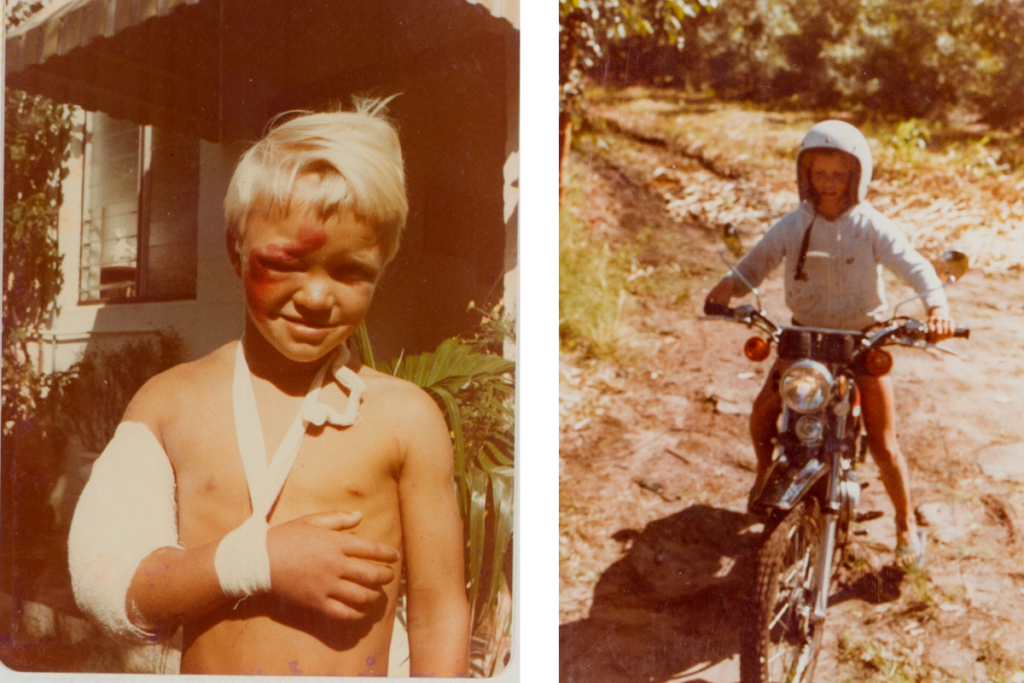
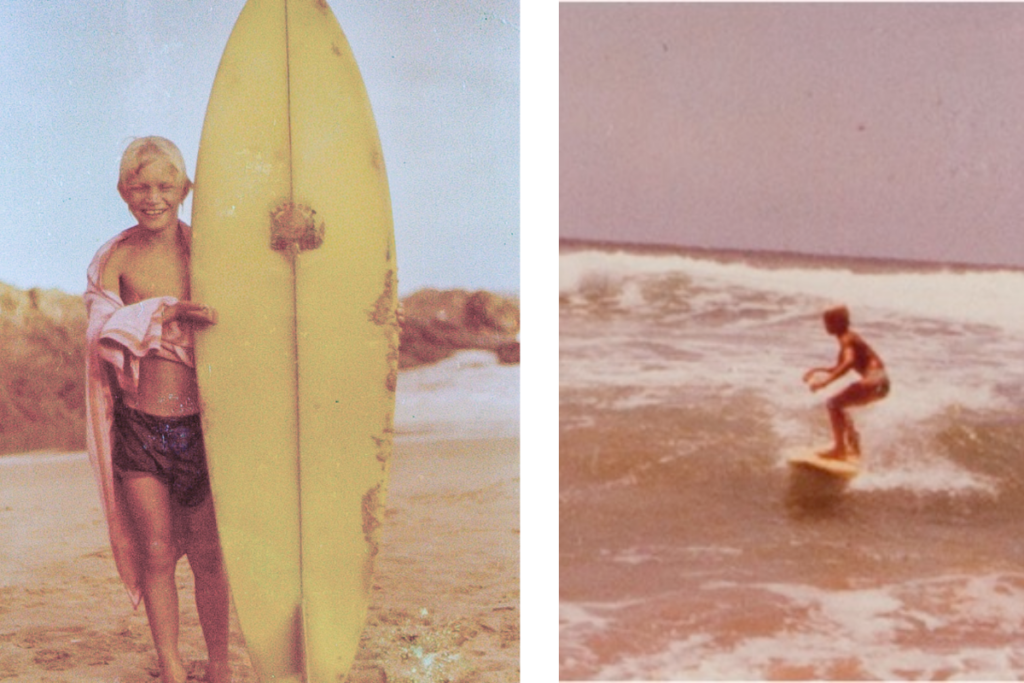
When I was 5 years old, I joined my teenage brother on a joyride with his friends. The Baja buggy was open-topped, and when we rolled, we were all thrown down a roadside embankment. I hit a tree and severed my right brachial plexus nerve. I would never be able to use my right arm again.
The paralysis caused my arm to slowly waste away, and the muscles in my hand and fingers began to contract. My right arm looks different, and it is very obvious, especially with my shirt off. That is what I live with.
But here’s the thing: My whole life, I have not regarded myself as disabled.
I live with a disability, but I never saw myself as disabled, not compared to what I viewed as “real” disabled people.
I only had a paralysed right arm, whereas “they” had actual disabilities, like missing legs, using a wheelchair, or having no arm at all.
“How terrible would that be? I am glad I am not disabled,” I thought to myself.
I was disengaged from the disability community.
On the other hand, the people without disabilities I interacted with, especially strangers, saw me as disabled.
I saw them looking at my arm in that all-too-familiar way that people with disabilities know too well, like a stare trying not to be a stare.
You can see them thinking, “How terrible would that be? I am glad I am not disabled.”
So I lived in this in-between world with two parallel realities: the way I saw myself and the way everyone else saw me.
But who was I kidding but myself? I was definitely disabled.
Then came 2015.
The International Surfing Association had invited its member countries to send teams of surfers with disabilities to the inaugural ISA World Adaptive Surfing Championship in La Jolla, California.
South Africa sent a team of four surfers, and I was one of them.
After years of competing in sports alongside people without disabilities, this would be the first time in my life that I would compete in an event exclusively for people with disabilities. The barrier to entry was having a permanent disability, and I qualified.
Talk about a major shift in my identity.
Previously, I was the guy who did all these things — sports, adventures, life — DESPITE having only one functioning arm. Now I was part of a team, doing an event BECAUSE I had only one functioning arm.
Subtle, but profound.
Perhaps the best description of that time was a “soft acknowledgment.” An acknowledgment that I was disabled and that I had begun to see myself differently.
A while ago, I wrote a short essay called The Gift, and it demonstrates the subtle tug-of-war that had been going on in my head throughout much of my life:
People remember me. That is my gift.
Imagine an advantage like that? What would you give to have most of the people you meet remember you?
I gave my right arm, and so far it has been worth it.
Actually, I still have a right arm. It just looks a bit funny and does not work properly.
People often wonder, and some ask, how I manage to do stuff with only one arm.
What I say to them is this: Imagine that everyone else but you had three arms, and they kept asking you how you manage to do stuff with only two arms. What would you say?
Sometimes I catch a reflection of myself in a mirror or shop window. It is still a bit of a shock for me to see myself with an arm like mine, because you do forget.
It is during these split seconds that I admire my friends and family because they accept me as I am, and if they can, then so do I.
People don’t actually remember me. They remember my arm, but it’s all the same to me because it is this arm that has helped define my character.
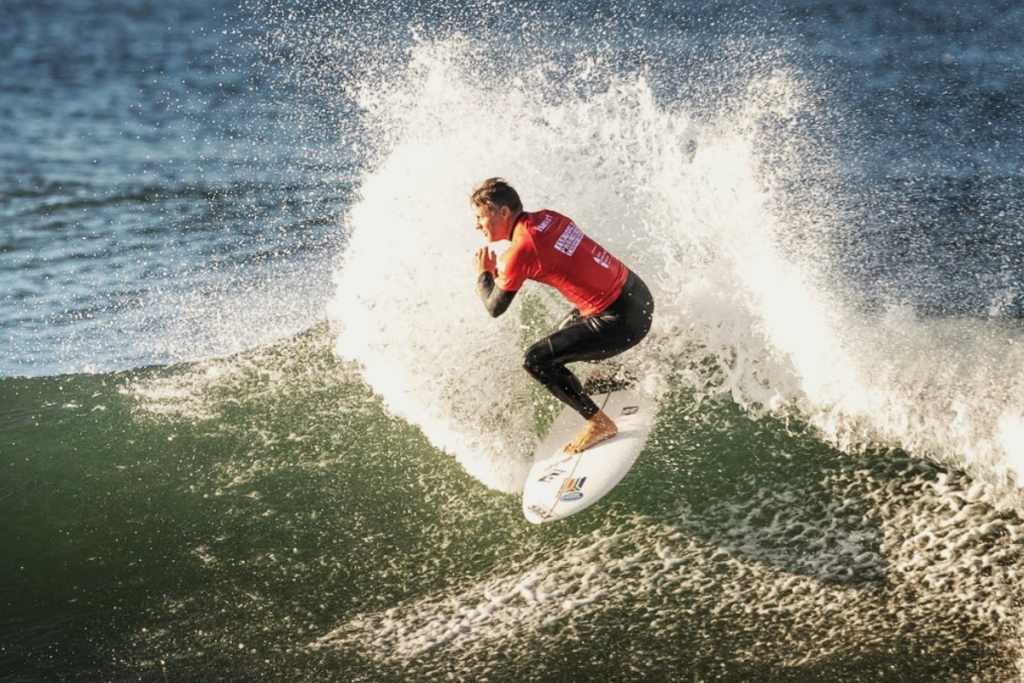
That event in La Jolla in 2015 introduced me to a community that has grown into something very special in my life: a family that is inclusive, accepting, and understanding.
Everyone has a different story. Many include trauma or life-changing events. But there are also stories of perseverance, adaptation, acceptance, competition, friendship, and discovering what is possible through sport.
That is why we are so close. There is a shared understanding even when our individual experiences are very different.
But let’s get uncomfortable, shall we?
Let’s talk about the missing middle.
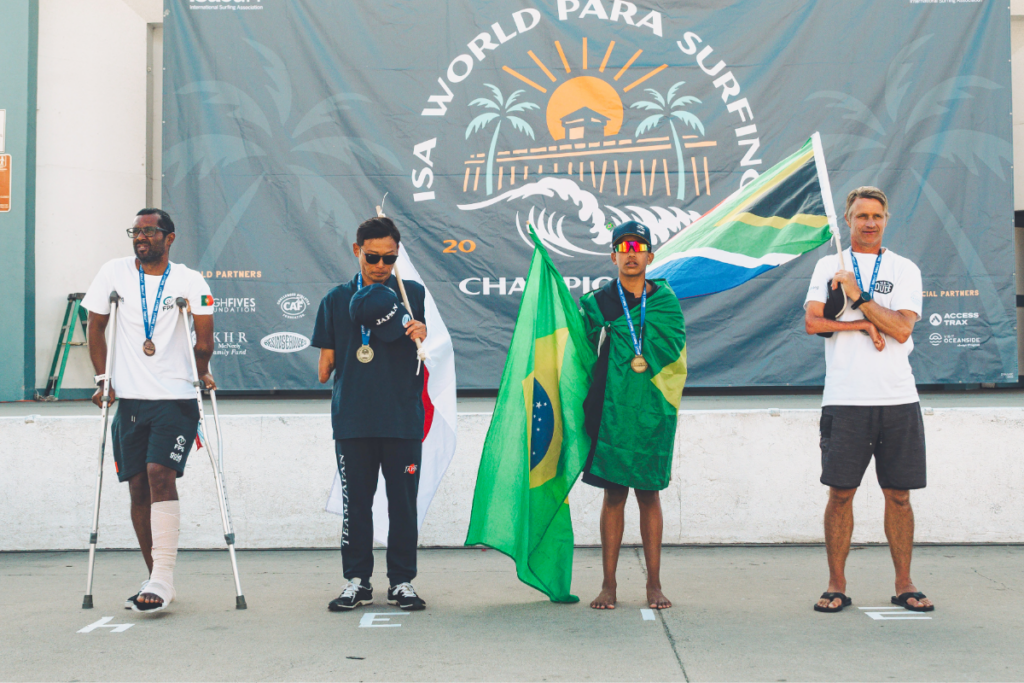
I am talking about people like me, whose disabilities may require fewer adaptations or may not immediately fit someone’s perception of disability.
I don’t have mobility challenges. I don’t need adaptive equipment for daily life, and I don’t need an assistant to participate in my sport.
On the surface, I may appear to have it easy. But living with a disability has still shaped how I move through the world, how other people see me, and, for much of my life, how I saw myself.
Within the adaptive sports community, I am also relatively independent. A person without a disability might see me as “a guy with only one arm,” whereas someone within the disability community might see me as “a guy with only one functioning arm.”
Similar words, completely different meanings.
So are people like me really part of the family? Are athletes whose disabilities require fewer adaptations fully accepted within adaptive sport?
From my perspective, the answer is yes. Absolutely.
The fact that I can walk unassisted to the water doesn’t change the fact that I can’t paddle as fast or that catching waves can be harder for me.
My dad always used to quote a saying: “I felt sorry for the man who had no shoes, until I saw a man with no feet.”
That idea of comparison stayed with me. It can be easy to look at someone else’s disability and decide that their barriers are greater, and therefore that your own disability somehow doesn’t count. I did that for much of my life.
What I eventually learned through adaptive sport is that everybody’s ability and experience with disability is different. There isn’t a threshold someone has to cross before they belong or deserve to find community through sport.
That brings me to something I have been thinking about for years.
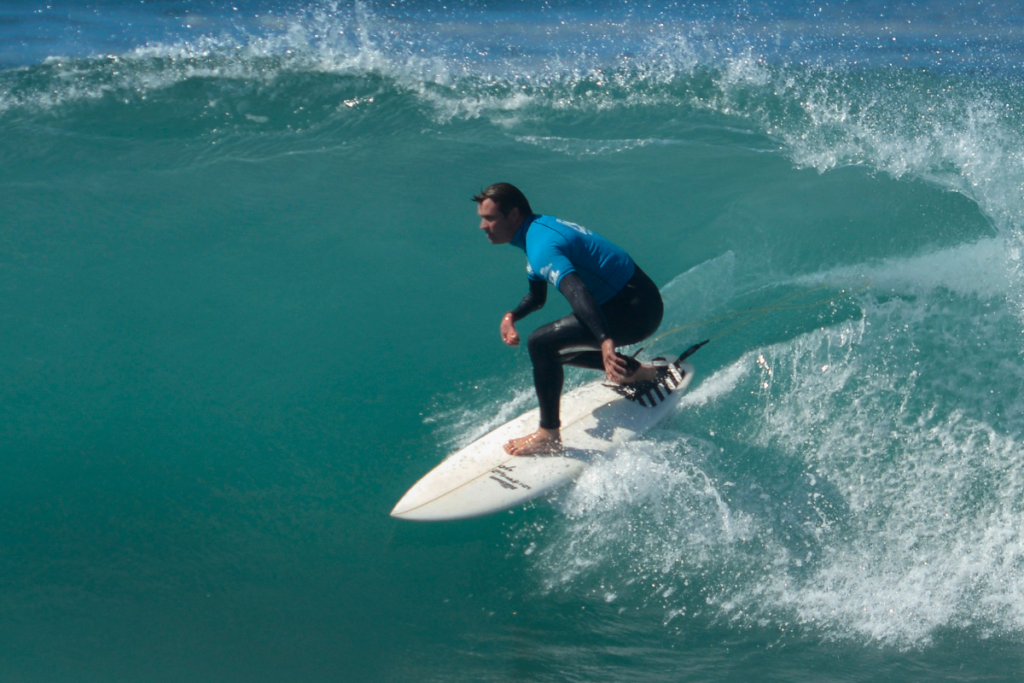
From what I have seen competing in adaptive surfing, participation in the upper limb division has declined significantly since I first competed in 2015. In my experience, the division simply isn’t growing.
I would have expected participation to have doubled by now, especially with athletes like Bethany Hamilton bringing so much visibility to upper limb differences in surfing. You would think more people would be finding their way into the sport, but we just aren’t seeing those numbers.
So where are all the other people with upper limb differences? Why aren’t they joining the sport?
Are there people watching adaptive sports and thinking they don’t belong because they don’t see themselves represented?
Do they think they aren’t “disabled enough”?
Or is it simply that they don’t regard themselves as disabled?
Like I didn’t for 45 years.
I suspect there are many people out there with brachial plexus injuries, upper limb differences and other disabilities who have never considered adaptive sport because they don’t think it is meant for them.
I want them to know that it is.
Take up a sport. Try something new. Come and compete if competition interests you. Or simply find a way to move that you enjoy.
Your presence may help someone else recognise that there is a place for them, too.
There can, of course, be practical barriers to getting involved in sport, including the cost of specialised equipment, training, and competition.
Organisations like the Challenged Athletes Foundation help remove those barriers by providing opportunities and support for people with physical disabilities to pursue active lifestyles through sport.
CAF has played an important role in my own journey. I can state quite categorically that I would not have won two world titles and two US Open titles without the support of the Challenged Athletes Foundation.
If you’re thinking about getting into a sport, start by exploring the opportunities available to you. Attend a clinic. Learn about grant opportunities. Meet other athletes. Try something you haven’t tried before.
Even if, like me, you aren’t sure you’re “disabled enough.”
I must warn you, though: You may break down a few personal barriers along the way.
I still notice those “stares trying not to be stares.”
I just see them differently now.
Hope to see you soon.
Antony “Ant” Smyth is a competitive para surfer, photographer and CAF athlete. He is a two-time World Adaptive Surfing Champion, two-time US Open Adaptive Surfing Champion, five-time South African Adaptive Surfing Champion and US National Adaptive Surfing Champion. Outside of surfing, his sports over the years have included mountain biking, skydiving, trail running, lifesaving, spearfishing, fishing and karate.
“Anything I can do, I can do better.”