This blog post was written by Fenna Ravestein, Program Coordinator for CAF Idaho. Fenna is committed to creating inclusive, growth-focused environments for youth through sport, education, and community engagement. Her work is grounded in the belief that movement builds confidence, connection, and opportunities for every student.
When students feel included, they feel confident and confidence fuels learning.
Inclusive Physical Education gives every child a chance to participate meaningfully, regardless of physical, cognitive, or sensory ability. These activities build motor skills, support social-emotional growth, and help create a sense of belonging that extends beyond the gym.
Inclusive PE isn’t only about modifying sports. It’s about designing movement experiences where each student’s abilities are valued and celebrated. Small adjustments—like offering different equipment choices or changing the speed of a game—can help students access movement in ways that feel safe, joyful, and empowering.
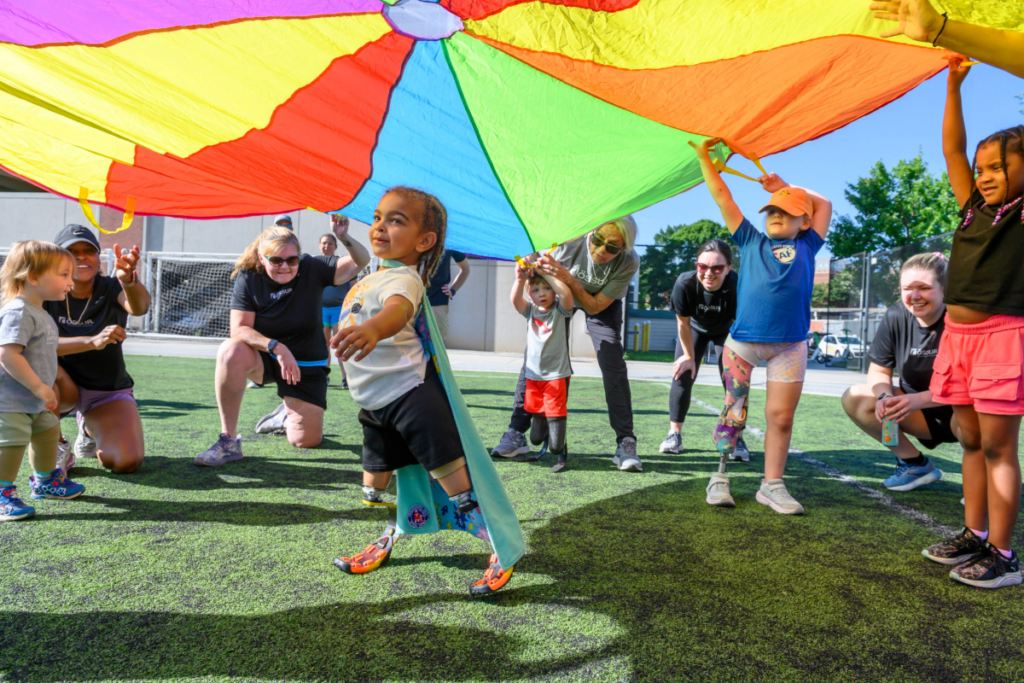
The activities below are flexible, easy to set up, and work across indoor and outdoor spaces. They can fill a short movement break or support an entire class session. Each one centers collaboration, creativity, and student choice.
Focus: Teamwork, upper-body coordination, gross motor skills, and spatial awareness
How it works: Students hold the edges of a parachute (or sheet) to create waves, lifts, or ball-rolling challenges.
Why This Is Effective: Parachute play is a fantastic way to encourage children with special needs to work together, practice communication abilities, and build both fine motor skills and gross motor skills. The rhythmic movement supports emotional regulation, and the visual colors spark curiosity. It also helps children feel motivated as they participate in shared physical activities that naturally build social skills and self-expression.
Adaptations: Seated movement options, grip loops, quieter waves, different parachute sizes, visual cues, buddy-paired gripping.
Progressions: Add directional calls or aim to keep a lightweight ball centered.
Focus: Hand-eye coordination, cooperative play, and reaction time
How it works: Students work together to keep a balloon or beach ball off the floor using any safe hit.
Why This Is Effective: Because the balloon moves slowly, it gives children time to practice decision making, spatial awareness, and problem-solving skills in a low-pressure way. The game naturally strengthens physical abilities, improves hand eye coordination, boosts self-confidence, and promotes meaningful social connections with peers and friends. Children love that it feels like pure fun, but teachers see measurable growth in cognitive skills and communication skills.
Adaptations: Allow bounces, use assistive devices, shrink the play zone, choose textured balloons or balls.
Progressions: Timed rallies, team roles, or an optional net.
Focus: Body awareness, imaginative play, and cognitive growth
How it works: Students move like different animals—hopping, stretching, crawling, or flapping.
Why This Is Effective: Imaginative movement supports cognitive development, expressing creativity, social interaction, and building gross motor skills. This activity allows children to choose how they move, which boosts autonomy and self-expression. It is a safe activity that encourages children to engage, play, and develop a stronger sense of body awareness, especially helpful for special needs learners.
Adaptations: Visual cue cards, seated options using expressive arm and upper-body movement.
Progressions: Color pathways, shape-finding tasks, or working in small “animal teams.”
Focus: Listening skills, spatial awareness, and self-control
How it works: Students move to music or signals and freeze when cued.
Why This Is Effective: This structured activity helps children practice emotional regulation, focus, and problem-solving abilities while still having fun. The rhythm of the music encourages movement, and freezing builds cognitive skills like impulse control and response timing. Children work together, laugh, and feel motivated to participate, helping to build confidence and social skills through playful learning.
Adaptations: Visual indicators (stop signs), “Red Light/Green Light” variations.
Progressions: Freeze in shapes or themed poses such as tall, tiny, or superhero stances.
Focus: Movement planning, emotional regulation, listening skills, and cognitive development
How it works: Place colored mats, floor dots, painter’s tape lines, or foam squares around the room. When the music plays, children move across pathways—walking, marching, tiptoeing, rolling, or hopping. When the music stops, kids freeze on the nearest spot.
This game is very similar to Freeze & Go, but with a stronger emphasis on spatial awareness, route planning, and creative movement.
Why This Is Effective: Musical pathways combines physical activities with structured decision-making, giving children chances to practice emotional regulation, problem solving abilities, and strategic thinking. It also supports self expression, allowing kids to move creatively while benefiting from predictable cues like music start/stop patterns.
Adaptations: Use tactile markers for children who benefit from different textures. Shorten distances for safety or provide visual arrows or shape cues.
Progressions: Assign color-based tasks (e.g., “stop on blue, stretch on red”) to build cognitive skills.
Focus: Teamwork, problem-solving, communication skills, and safe movement planning
How it works: Teams move “treasures” (beanbags or objects) across a defined space by passing, pushing, or carrying.
Why This Is Effective: This game strengthens critical thinking, problem solving skills, and strategic thinking. Children practice sharing responsibilities, communicating with peers, and planning movements. Very similar to solving a mini obstacle course together. Using objects like bean bags, balls, or even a laundry basket, kids can adapt tasks to their ability level, building self-confidence and strong social interaction as they succeed as a team.
Adaptations: Shorter distances, larger or textured objects, clear visual pathways.
Progressions: Timed rounds, new transportation rules, or rotating support roles.
Focus: Gross motor skills, hand-eye coordination, problem solving, and spatial awareness
How it works: Children roll, push, or gently throw a soft ball toward a set of plastic bottles, foam pins, or even stacked laundry baskets. The goal is to knock down as many pins as possible.
Why This Is Effective: This game supports improve hand eye coordination, strengthens gross motor skills, and helps with decision making as kids choose how to roll or throw. Because children can work individually or with friends, it builds social skills, self confidence, communication abilities, and problem solving skills.
Adaptations: Use lighter or larger targets for children with limited physical abilities, or offer use bean bags instead of balls for different textures and easier gripping.
Progressions: Add scorekeeping for cognitive skills or let children design their own pin setup for expressing creativity.
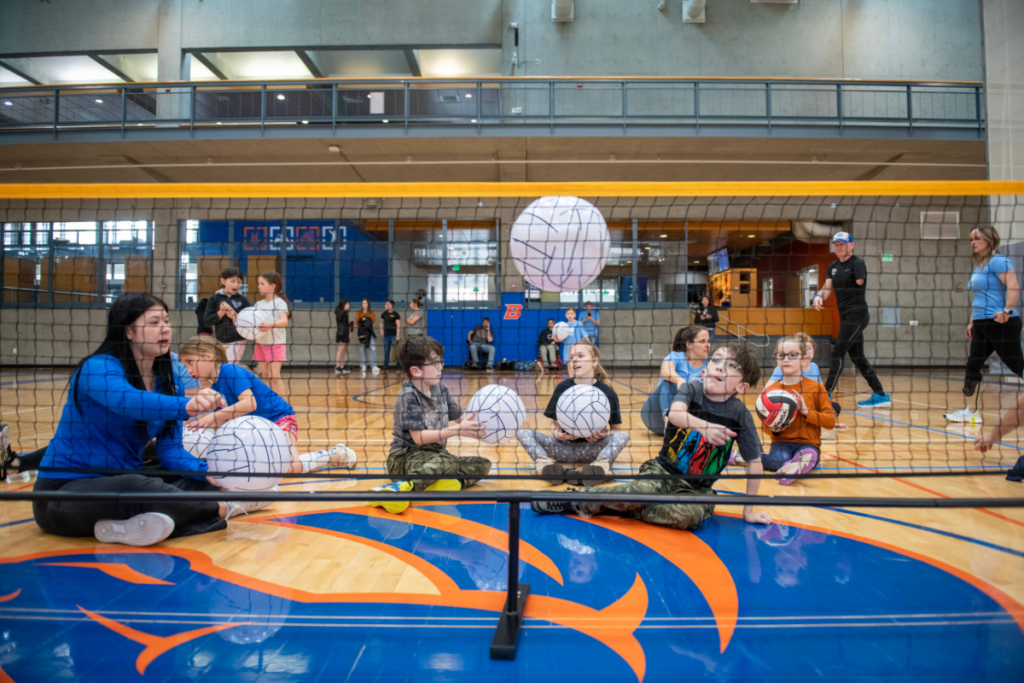
Effective inclusive instruction is built on flexibility, clarity, and an understanding that success looks different for every learner. Offering meaningful choices—equipment types, roles, or movement styles—can increase motivation and help students feel ownership over their experience.
Clear communication supports all learners. Combining verbal directions with visual demonstrations or tactile cues helps students understand expectations and engage confidently. Instead of focusing on performance alone, note engagement, effort, and connection—reliable indicators of growth.
Peer support strengthens confidence and classroom community. Pair or group students to encourage collaboration and shared success. Keep backup strategies ready: alternative rules, extra equipment, or quiet spaces for sensory regulation.
When inclusivity is the foundation, movement becomes joyful. Students feel respected and supported, and they gain the confidence to explore what their bodies can do. With simple adaptations, every student can participate, grow, and shine.